EAPA General Assembly: Connected with Purpose in Finland
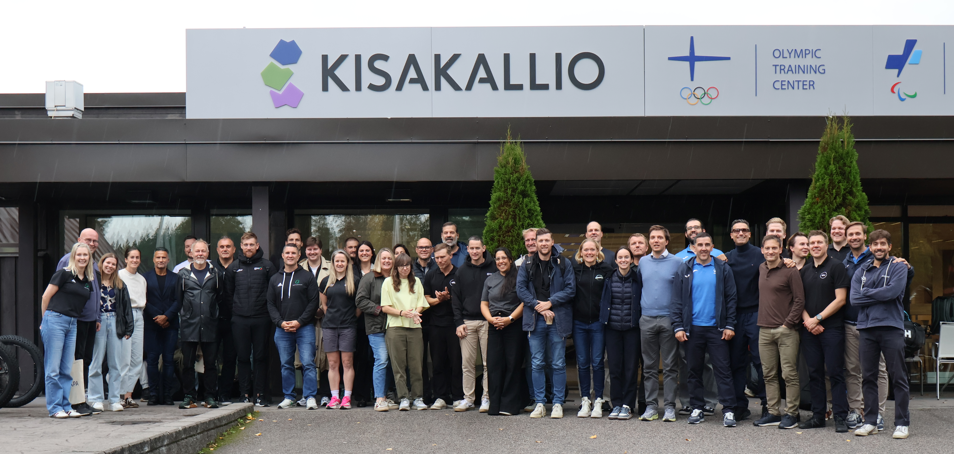
The EAPA General Assembly brought athlete associations from across Europe together in Kisakallio, Finland, for two days focused on strengthening the collective response to some of the most important issues facing athletes today.
For EAPA President Natalia Orive, one message underpinned the event: “What we want EAPA members to take away from this General Assembly is the importance of being united and continuing to work for athletes’ rights in Europe.”
That sense of unity shaped the programme from the outset. While Day Two provided the formal setting for discussions around EAPA’s advocacy, strategy and the evolving international framework for athlete rights, the decision to lead with Tackle Your Feelings Europe (TYFE) on Day One was equally significant.
Mental health and wellbeing remain among the biggest challenges facing athletes in elite sport. TYFE is examining not only athletes’ mental health experiences, but also the capacity of player associations to respond effectively. As that research develops, the practical workshops delivered in Kisakallio may prove crucial in helping associations across Europe build stronger and more consistent systems of support.
Professor Vincent Gouttebarge established that context by presenting the TYFE research, before Dr Hannah McCormack led members through practical workshops addressing emergency action planning and practitioner wellbeing. Her advice to those working with athletes was simple: “Be the best version of yourself for athletes.”
The Gaelic Players Association’s Arron Graffin, Pamela Gilpin and Stephen Henry added another important dimension, drawing on their experience to explore how those supporting athletes can approach difficult conversations. Together, the sessions moved beyond recognising the scale of the mental health challenge towards developing the practical skills, structures and confidence needed within athlete associations.
Day Two widened the lens to the rights, representation and structures that shape athletes’ working lives. Walter Palmer executive Director of World Players Association and Ann-Sophie Duyck of United Athletes and EAPA Board member led a discussion on the ILO Guidelines on Decent Work in the World of Sport, exploring what the Guidelines mean for athletes and the importance of independent athlete representation and social dialogue in turning international principles into meaningful change.
The international perspective continued as Eric Zachrisson joined Walter Palmer and Natalia Orive to consider the Global Framework for Players and Athletes. Their discussion explored the significance of the Framework for the international player association movement and the opportunities it presents to strengthen athlete voice, representation and cooperation across borders.
Attention then turned to EAPA itself. Led by the Association’s leadership, members reflected on EAPA’s future direction and the priorities that should shape its work in the years ahead. Discussions encompassed its growing advocacy with the European Commission and Council of Europe, the development of its international network and how the experience and expertise within its membership can inform that work.
For Orive, whether the focus is mental health and wellbeing, decent work, representation or institutional advocacy, the underlying principle is the same.
“We need to keep working for athletes across Europe, through the advocacy work we are doing with the European Commission and Council of Europe, and through the network of expertise we are working hard to establish in partnership with World Players and FIFPRO Europe.”
Across the two days, that meant moving from the practical to the strategic: strengthening the capacity of associations to support athletes directly, while also considering how they can collectively influence the wider systems and institutions shaping athletes’ working lives.
EAPA Vice President Simon Keogh feels the connections made through EAPA are an important part of building that capacity.
“I really believe events like our General Assembly can do so much for the European athlete movement. By bringing everyone together in one room, associations in one country can learn from the experiences of those in another, while different sports can learn from each other too.
“There is a huge pool of expertise across our network. Events like this help us share that knowledge, build stronger connections and make sure our members can draw on that expertise to better support and represent their athletes.”
It was a fitting reflection on two days spent Connected with Purpose.