Jun 5, 2026
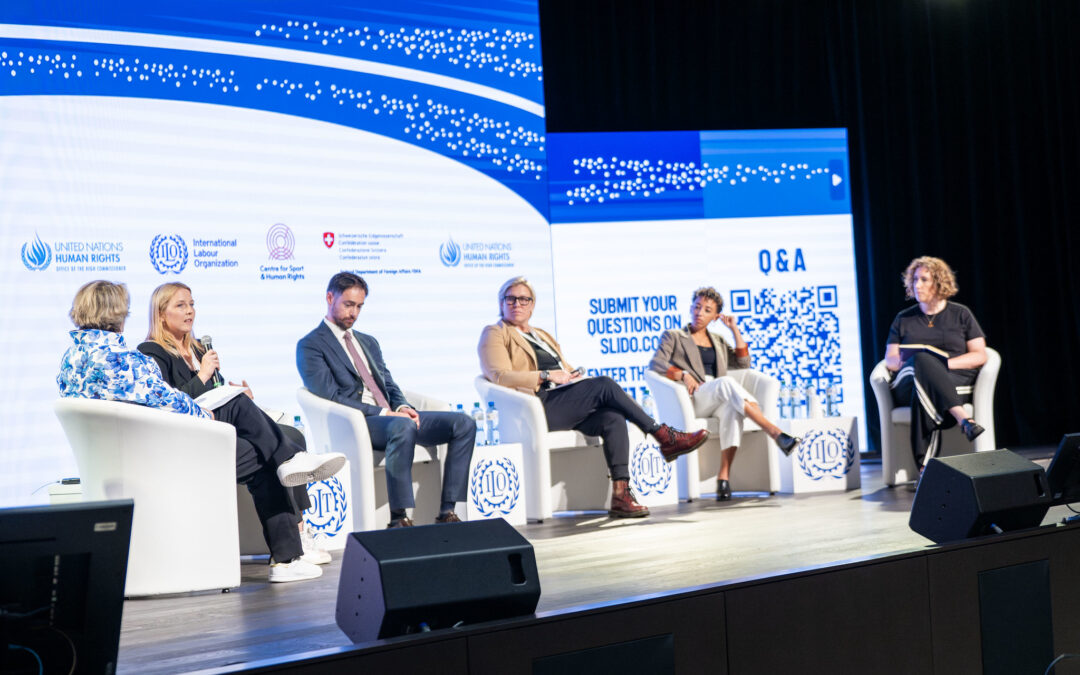
The European Athletes and Players Association (EAPA) notes with concern the recent comments attributed to IOC President Kirsty Coventry regarding the remuneration of athletes.
At a time when the rights of high-level athletes are receiving increasing recognition at international level, such statements risk undermining important progress made towards ensuring fair and sustainable working conditions in sport.
Earlier this year, the International Labour Organization (ILO) adopted Guidelines on the Application of the Fundamental Principles and Rights at Work and on Violence and Harassment in the World of Sport. Developed through social dialogue involving governments, employers and workers’ representatives, the Guidelines recognise that elite athletes are entitled to fundamental rights and protections in the workplace.
For EAPA, this represents an important milestone. Professional athletes dedicate their careers to training, competition and performance. They generate significant value for sport and should be recognised accordingly, with appropriate rights, protections and fair economic participation.
As discussions continue around the future of the European Sport Model, EAPA believes there is a significant opportunity to place athletes’ rights, dignity and representation at the centre of sport governance. The recognition of athletes as workers is not a threat to sport; it is essential to its long-term sustainability.
Athletes are not volunteers in a professional sporting ecosystem. They are professionals whose contribution deserves recognition, protection and respect.
Jul 2, 2025
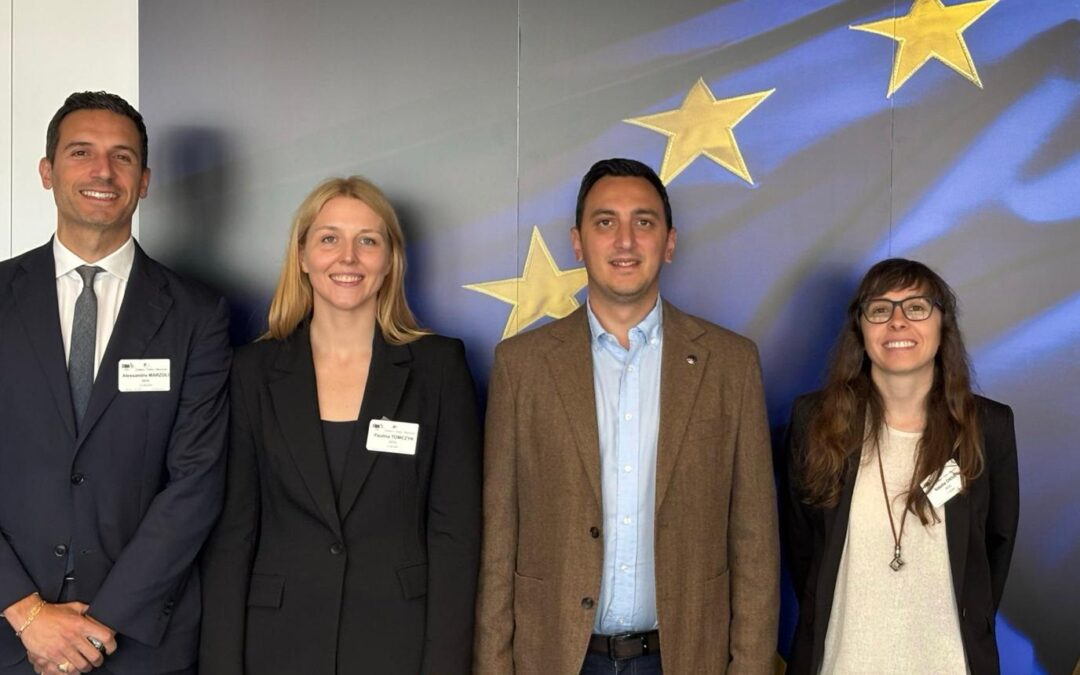
Last week, representatives of the European Athletes and Players Association (EAPA) were in Brussels for a visit that included a meeting with Commissioner Glenn Micallef, the European Commissioner for Intergenerational Fairness, Youth, Culture and Sport.
Led by EAPA President Natalia Orive Siviter, General Secretary Paulina Tomczyk, and EAPA Executive Board Member Alessandro Marzoli, EAPA were in Belgium to bring the voice of athlete and player associations into key discussions through workshops facilitated by the SOPROS project which aims to assess, evaluate, and implement athletes’ social protection in Olympic sports.
The meeting with Commissioner Micallef took place on the second day of the visit to Belgium and marked a significant step forward in recognising athletes not only as performers, but as young citizens with rights, responsibilities, and a rightful place in shaping the systems that govern them.
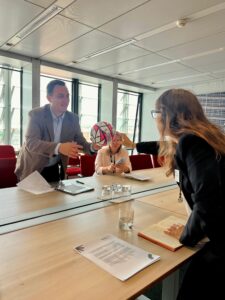
In a focused discussion, EAPA highlighted the real-world challenges many athletes face and which are often obscured by Olympic medals and headlines. The delegation shared concrete examples from their work, drawing attention to critical gaps in maternity protection and mental health support.
Commissioner Micallef reassured the delegation that the protection of athletes’ rights is a key part of his mandate, and the welfare of all athletes will remain central to his work. He emphasised that sport must reflect the same values that Europe upholds in society, and made it clear that athletes deserve greater freedom, voice, and agency in shaping their futures.
The importance of social dialogue in achieving these goals emerged as a central theme. Discussions underscored the urgent need to strengthen athlete representation across all Olympic sports and to establish formal mechanisms that enable athletes to engage meaningfully with employers, federations, and public authorities.
The engagement with the Commissioner coincided with EAPA’s continued participation with the SOPROS project. The workshop convened high-level representatives from the European Commission (including Sport, Social Security, and Social Dialogue Units), the European Parliament, the Council of Europe, the EU Presidency trio (Poland, Denmark, Cyprus), European federations, and academic and policy experts.
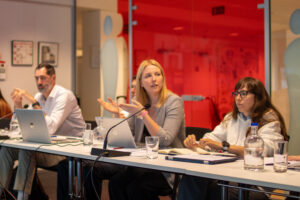
credit: European Olympic Academies
Rooted in the findings of the Erasmus+ EMPLOYS project, SOPROS addresses the ongoing reality that many Olympic athletes lack consistent or enforceable social protections. From inadequate healthcare coverage to unclear pension entitlements and ad-hoc maternity support, the gaps are both significant and systemic.
At EAPA, we understand that policy change alone isn’t enough. Representation matters. Athlete and player associations are essential to turning policy into protection. Our meeting with Commissioner Micallef affirmed that the European Commission not only recognises this truth, but is ready to support it.

Jun 11, 2024
European Athletes and Players Association (EU Athletes) is the European multi-sport federation of independent athlete and player unions and associations in sports such as basketball, handball, rugby, volleyball as well as individual and Olympic sports. More than 25 000 athletes are represented through the membership.
EAPA represents its members on matters that affect athletes, such as athlete rights, working conditions, integrity of sport, dual careers and education and many others.
We are looking for an intern to support the team in management and implementation of ongoing EU projects focusing on the integrity of sport and fight against match-fixing. The work of the intern will focus on assisting in preparation of the project deliverables, monitoring and reporting, participation in meetings as well as internal and external communication. Internship will also include other tasks related to current work priorities and every-day running of the association, depending on the interest and profile of the intern.
Profile
- Currently completing a university degree in a relevant field (European studies, Sport policy, Project management, EU law, international relations or similar), or a recent graduate.
- Knowledge of research methodology and excellent drafting skills.
- Good knowledge of EU funding programmes, especially Erasmus+, and project management methodology, as well as the European legal and policy framework, in particular related to sport policy.
- Basic ICT skills.
- Professional knowledge of English, knowledge of other languages is advantageous.
- Interest in the topic of sport integrity, athlete rights and representation.
Conditions
- 6 months paid internship, starting on the 1st of September 2024 (flexible).
- Remote or based in Brussels, with occasional travels possible.
Application process
- Send a CV and short cover letter to Paulina Tomczyk, the General Secretary at paulinatomczyk@euathletes.org before the 30th of June 2024.
- Only shortlisted candidates will be contacted for interviews, which will take place in July.

Aug 30, 2023
Brussels, 30.08.2023
In the light of the unacceptable behaviour of Luis Rubiales, the President of RFEF (Spanish Football Federation), during the FIFA Women’s World Cup final, as well as the subsequent events, EU Athletes strongly condemns such act as inappropriate, damaging to the values of sport and contrary to the rights and dignity of athletes.
EU Athletes is committed to the principles of good governance and the ongoing fight for gender equity in sport and beyond. We express our support to Jennifer Hermoso and other Spanish national team players and are glad to see the solidarity from the players and other sport stakeholders.
We believe that in order to eradicate such behaviours from sport and wider society it is essential to make sure that they do not go unpunished. Not only Mr Rubiales, but all sport officials responsible for or involved in attempts to disregard the incident, silence, coerce or blame the player should face appropriate consequences.
Contact: Paulina Tomczyk, General Secretary paulinatomczyk@euathletes.org
Dec 22, 2022
PROLead is a collaborative partnership project co-funded by the Erasmus+ Programme of the European Union and coordinated by EU Athletes, with German Sport University Cologne and 8 player
associations from different countries and sports (GPA, RPI, PPF, FNASS, UBE, TCA, AJFS, AJJV) as partners. Focusing on the topic of dual careers of athletes, the aim of the project was to enhance leadership skills of athletes, as well as volunteers and staff of player associations, by designing and implementing leadership courses at the European and national level.
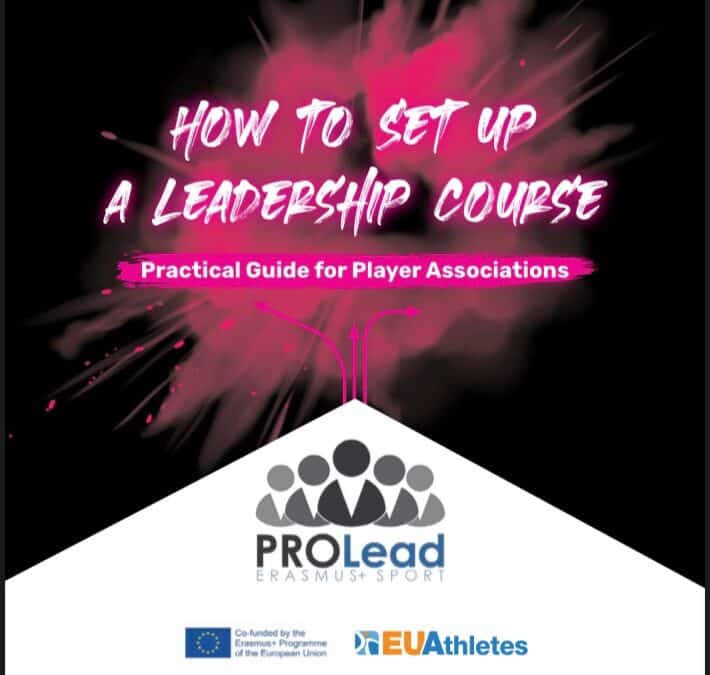
After the Dissemination Conference which was an opportunity to share good practices and results of the three years of cooperation, the project is now coming to the conclusion at the end of the year. Experiences gathered during different stages of the project are presented in the final intellectual output How to Set Up a Leadership Course? Practical Guide for Player Associations. Building on the research phase, the design and implementation of both European and National Leadership Courses, as well as the evaluation and participant’s feedback, the Guide offers player associations or other stakeholders guidance and advice related to leadership education.
How to Set Up a Leadership Course? Practical Guide for Player Associations
For more information contact Paulina Tomczyk, PROLead Project Manager paulinatomczyk@euathletes.org