Dec 18, 2019
On the 13th of December at FIFPro House in Amsterdam, EU Athletes organized the wrap up meeting for the Protect Integrity Plus 2018, co-funded by the Erasmus+ Programme, which aimed to adapt and implement the Red Button App in seven different countries and five sports. The app, previously developed by FIFPro and the Finnish Football Players Association (JPY), is a match-fixing reporting tool exclusively for athletes.
Over the two years, the project has involved 8 players associations across Europe: Hellenic Professional Volleyball Players Association (HPVPA), French Player Rugby Union (Provale), Danish Handball Players Association (HSF), Italian basketball Players Association (GIBA), Rugby Players Ireland (IRUPA), The Rugby Players Association (RPA), Spanish Futsal Male Players Association (AJFS) and the Spanish Futsal Female Players Association (AJFSF). The partners presented the Red Button App to the players during the team visits and encouraged them to report anything suspicious. The other actions implemented by the players unions concerned the social media campaign and grassroots videos to raise awareness among the youngest people about the importance of the integrity of sport. Furthermore, an academic research has been carried out by Professor Forrest, from University of Liverpool, through questionnaires and interviews with players and the entities designated as the recipients of the reports.
The final staff meeting, including EU Athletes, FIFPro, Finnish football players Associations (JPY) and the University of Liverpool, was focused on the overall project assessment, the evaluation of the partners’ performances and the recommendations for the final report. Furthermore, due to the encouraging results achieved, we decided, in accordance with our leading partners, to continue the project for a future development in other sports and countries, drawing the focus to different aspects that are crucial to make the project successful.
Dec 13, 2019
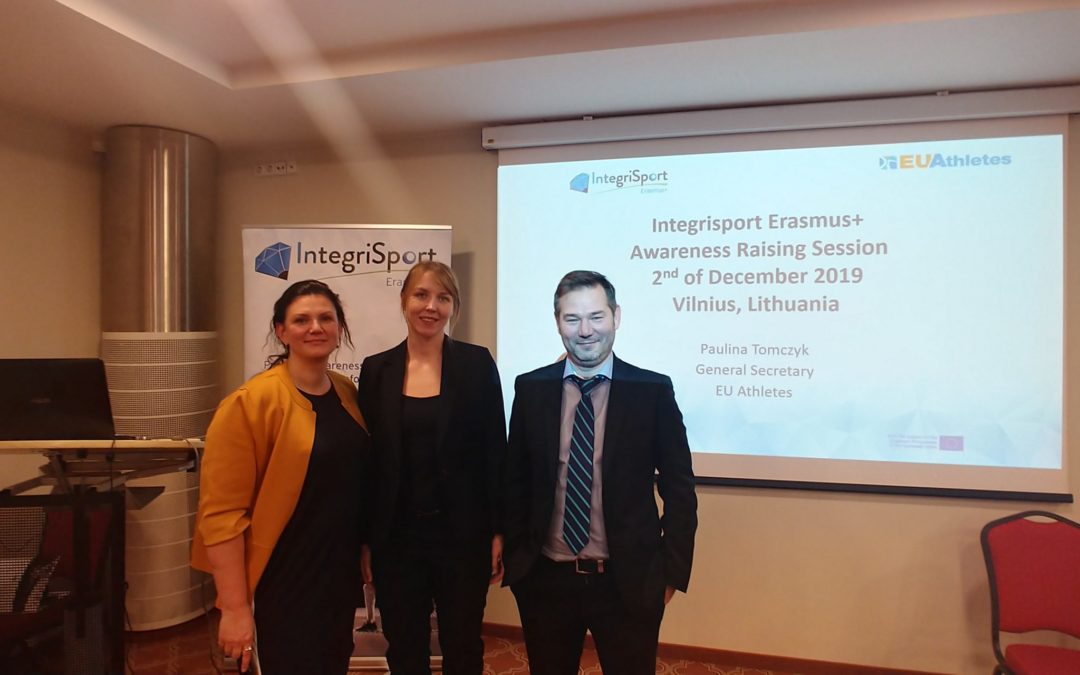
The third awareness raising session on combating sport manipulation and match fixing, within the framework of EU-financed Project Integrisport Erasmus+, was held in Vilnius, Lithuania, between 2-4 December. It was co-organized by the Ministry of Education, Science and Sport and the Lithuanian Sport Centre, together with CSCF-Foundation for Sport Integrity.
The productive debate was an occasion to discuss, with the representatives of Lithuanian Law Enforcement and Judiciary, the problematics concerning sport manipulation and match fixing, providing them with insights and recommendations to face and combat this spreading issue.
As representative of players, EU Athletes has been called on stage to share the perspective of the athletes and the work that, alongside its members, is carrying on to fight against match fixing. PROtect Integrity, the project founded by the Erasmus+ Programme of the European Union, was presented to the audience, depicting the key aspects and benefits for the professional athletes, including the player=led Red Button reporting App.
The Integrisport Erasmus+ awareness raising sessions provide the local law and juridical enforcement with a better knowledge and comprehension about the dangers of sport manipulation on society.
The next session will take place in Helsinki in February 2020.
Dec 11, 2019
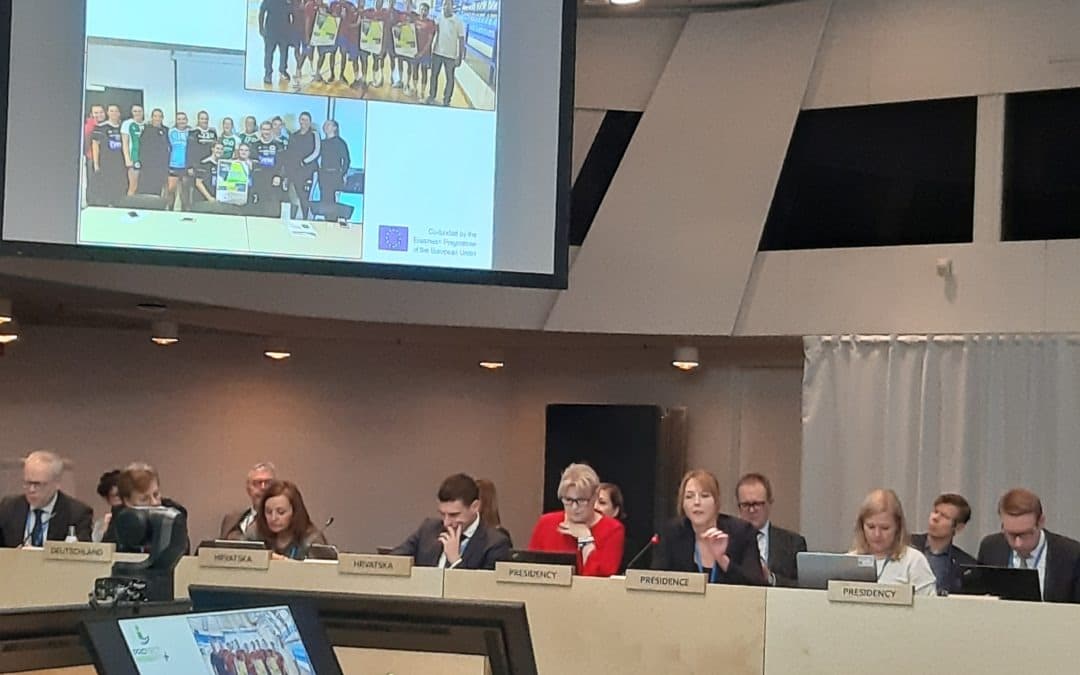
A meeting of Directors General for Sport took place on 9-10th of December in Helsinki. Corruption in sport was one of the main topics addressed by the Finnish Presidency, and the discussions came very timely after the adoption of the Council Conclusions on combating corruption in sport. EU Athletes was invited to take part in the debate as a part of the structured dialogue with the sport movement, in order to present the athletes perspective and the work done by the player unions when it comes to fighting corruption in sport. EU Athletes General Secretary Paulina Tomczyk presented the Erasmus+ PROtect Integrity Plus project and the Red Button Reporting App that contributes to the prevention and detection of sport manipulations. She also emphasized on the need to address corruption holistically, focusing on the need to improve the governance of sport organizations and protect the athletes’ rights.
Dec 10, 2019
On the #HumanRightsDay the World Player Association launches its first global study on child athletes’ experience in collaboration with Loughborough University. EU Athletes is involved in the development and dissemination of the project with three of its affiliates (Associación de Jugadores de Fútbol-Sala, the Norwegian Players’ Association (NISO) and The Cyclist Alliance), alongside International Rugby Players, Federation of International Cricketers Associations (FICA) and Women’s National Basketball Players Association (WNBPA).
The pilot study, called Project CARE (Census of Athletes Rights Experiences), is the first that looks into the childhood experiences of professional players; it will last two years and aims to change the way the rights of child athletes are promoted and protected throughout world sport, by building recommendations for sport governing bodies and player associations that will help to prevent child rights violation from happening. The origin of the project arises from the need to draw the attention to young athletes’ education and protection, as the institutions that govern sport have ignored, from a policy point of view, their responsibility to put children’s best interests at the top of their priorities.
Project CARE involves athletes through an anonymous survey, available in five languages (English, Spanish, French, Portuguese and Japanese), to get information and data about their experiences when they were child athletes. The survey includes sections to assess respondents’ demographic profile; recognition of their rights; factors related to their development; support for their individual and collective power, participation and voice; experiences of different forms of violence (physical and emotional as well as sexual harassment, abuse and exploitation); experiences of help and protection; current sporting performance and indicators of personal well-being. Due to the nature of some questions that could be distressing, the World Player Association will make sure that local services and self-care resources are supporting psychologically the athletes, as declared by Gigi Alford, Director of Sport and Human Rights of the World Players Association.
The survey, which results are expected on Spring 2020, is online and shareable via email or messaging platforms.
Nov 29, 2019
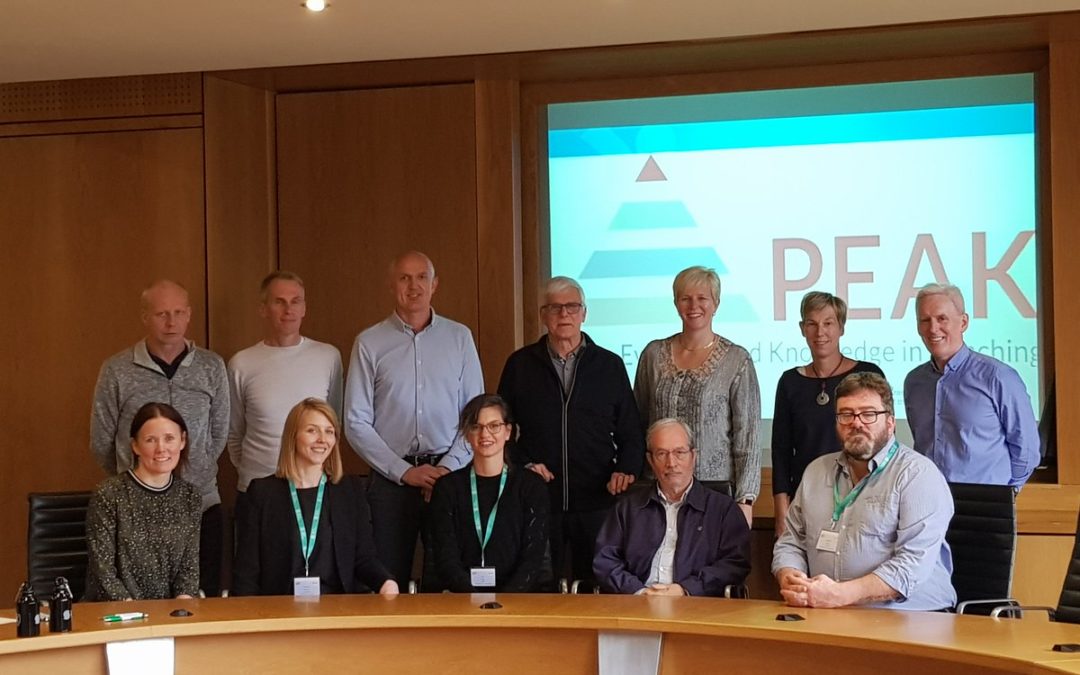
We are a proud partner of PEAK, an international project coordinated by the International Council of Sport Science and Physical Education (ICSSPE), aiming to develop coaching policy recommendations for use by sport federations, coaching bodies and governments. EU Athletes is collaborating with a unique consortium of expert partners, including the International Council for Coaching Excellence (ICCE), German Sport University Cologne, Finnish Olympic Committee, Sport Ireland Coaching, Swiss Federal Institute of Sport, and the Foundation of Sport Education and Information in Estonia to offer a comprehensive portrait of coaching and coach education across Europe and beyond. PEAK started on January 2019 and it is planned to run until December 2021.
The main objective of the project, founded by European Union ERASMUS+ programme, is to promote and support good governance in sport, focusing on four pivotal key aspects:
- The coaching system at the organisational and national levels (education, licensing, recruitment, ethics, representation, working conditions, quality assurance);
- Voluntarism in coaching;
- Opportunities for women in coaching;
- The regulation of coaching.
The project will be led by 6 crucial questions about new policies and their decision-making process in Europe, outlining the roles, responsibilities and status of coaching; as well as going through best practices to include coaching development in sports organizations’ strategies, to increase opportunities for women and to enhance the effectiveness of good governance measures.
The final result of the project consists in the production of 7 documents that will go beyond the 6 guiding questions to provide evidence based foundation for the project; determine criteria for inclusion of the examples of good practice; gather examples of coaching policies in European countries; present model policies related to the different elements of a coaching system and a set of policy recommendations; support organizations to assess the current status of their coaching system and related policies; provide European sport federations, governments and coaching organizations with a recommended process to collaboratively develop coaching policy.
Check out the brand new website at www.peak-coachingeu.com for updates and make sure to follow PEAK on Twitter and Facebook