Dec 19, 2022
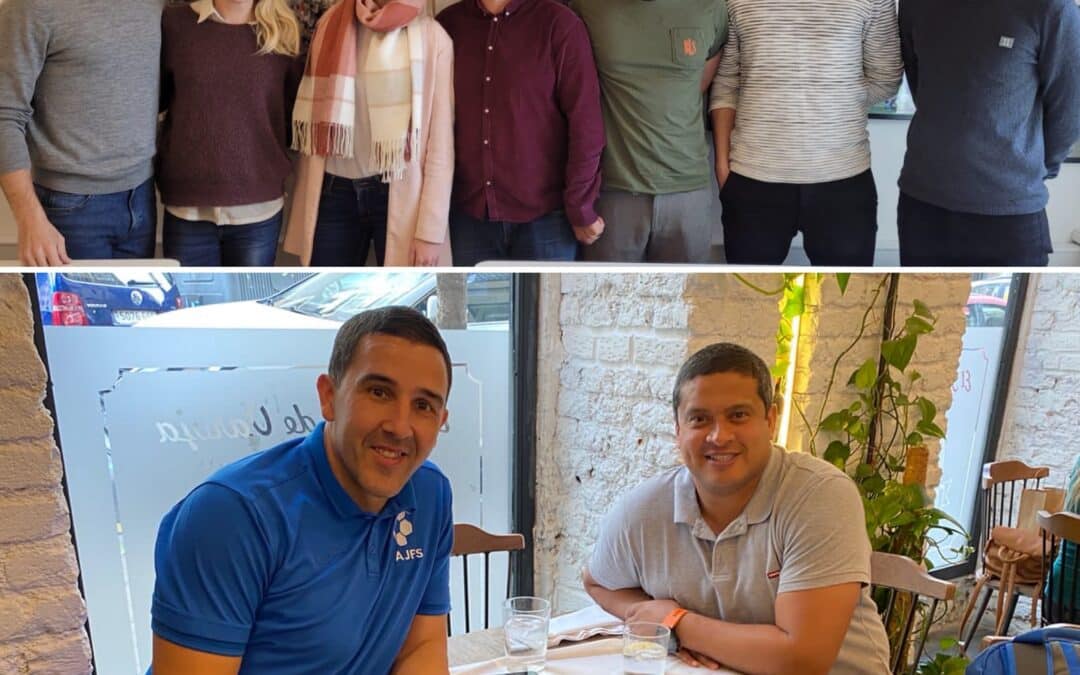
ProMobility project, financed by the European Union and focusing on exchanges and mobility between staff of player associations from Europe and South Africa, was implemented by EU Athletes between January 2021 and December 2022. The aim of the project was to support learning between player associations
The project was heavily impacted by the Covid-19 pandemic, leading to changes in the work programme, introducing Online Exchanges and limiting the number of job shadowing visits that were implemented. Nevertheless, the project helped to identify, share and expand good practice in supporting elite athletes through their associations. The player associations participating in the project represent more than 10,000 elite athletes. Therefore, the project positively influences these players as it helps to enhance the quality of work and support that the player associations can offer them.
The main topics of the project were:
- Player recruitment and engagement (as members of player associations)
- Player personal development
- Commercial development and marketing
- Communications and media
- Response to the Covid-19 pandemic
These topics have been explored through online and in-person exchanges between the staff of player associations and correspond to the chapters of the Good Practice Booklet. The purpose of the booklet was to gather and share good practices identified. Any athlete association or player union, as well as any other organization whose aim is to support athletes, can benefit from ideas and practical advice that has been gathered during the ProMobility project.
Consult ProMobility Good Practice Booklet
For more information contact Paulina Tomczyk, ProMobility Project Manager paulinatomczyk@euathletes.org
Dec 14, 2022
This morning, the Dissemination Conference of PROLead project has taken place online, gathering over 170 participants from player associations, sport organisations, dual career providers, universities and other organisations. The meeting was an opportunity to share the experiences and results of the project, good practices and discuss the topic of leadership education and player development.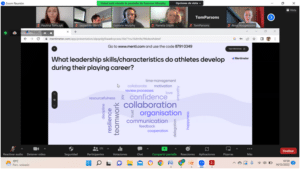
PROLead is a collaborative partnership project co-funded by the Erasmus+ Programme of the European Union and coordinated by European Elite Athletes Association (EU Athletes) with German Sport University Cologne and 8 player associations from different countries and sports (GPA, RPI, PPF, FNASS, UBE, TCA, AJFS, AJJV) as partners. Focusing on the topic of dual careers of athletes, the aim of the project was to enhance leadership skills of athletes, as well as volunteers and staff of player associations, by designing and implementing leadership courses at the European and national level.
The conference was kicked off by Tom Parsons, the CEO of Gaelic Players Association who shared his leadership journey in a keynote speech. Presentations of the PROLead project by Paulina Tomczyk, General Secretary of EU Athletes, and the project results: Desktop Research and Literature Review of Leadership Education for Athletes by Sebastian Uhrich from German Sport University Cologne and the European Leadership Course and Good Practice Guide by Eamonn Murphy from Gaelic Players Association followed.
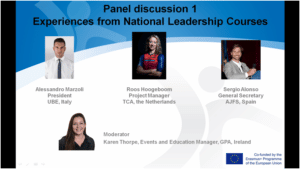
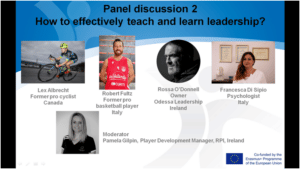
The participants also had an opportunity to hear from two panels. First one, moderated by Karen Thorpe from Gaelic Players Association, focused on the experiences of player associations who designed and delivered National Leadership Courses for their players during the PROLead project. Alessandro Marzoli from Union des Basketteurs Europeens, Roose Hoogeboom from the Cyclists Alliance and Sergio Alonso from Asociacion de Jugadores de Futbol Sala shared insights into their work. In the second panel, two athletes (Lex Albrech and Robert Fultz) and two facilitators (Rossa O’Donnell and Francesca Di Sipio) engaged in a discussion about how to best teach and how to learn leadership, moderated by Pamela Gilpin from Rugby Players Ireland.
The Conference was concluded by Natalia Orive, the Vice President of EU Athletes, who emphasised the work that EU Athletes has been doing to strengthen the leadership within the player association movement, and the importance of helping athletes to realise their potential and strength as leaders.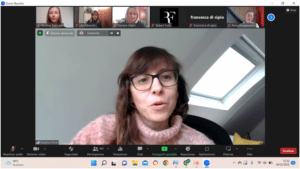
Paulina Tomczyk, the Project Manager of PROLead, said ‘I am very proud of the work that the project team has completed over the last 3 years. We have managed to bring positive results for the athletes, partner organisations and other EU Athletes members. Today’s conference was also an opportunity to share and exchange with other player associations and various stakeholders, with an ultimate goal to best support athlete development and leadership education.’
Oct 6, 2022
EU Athletes is looking to hire a Project and Policy Officer. The offer can be found here.
Aug 18, 2022
EMPLOYS (‘ERASMUS+ Understanding, Evaluating, and Improving Good Governance’) is a collaborative project which aims to improve good governance in the employment relations of athletes in Olympic sports. It does so by providing, evaluating and sharing evidence based information, practices and recommendations in sport and governance. EMPLOYS runs from January 2020 to December 2022.
As part of the project, a number of transnational project meetings (TPMs) have taken place.
The seventh TPM is scheduled for Monday and Tuesday, 19 and 20 September 2022. It will take place in Warsaw, Poland. During the TPM, the project partners will prepare the publication of the Final Report and the Final Event which will take place in Brussels later this Autumn.
More information about EMPLOYS is available here.


Jul 12, 2022
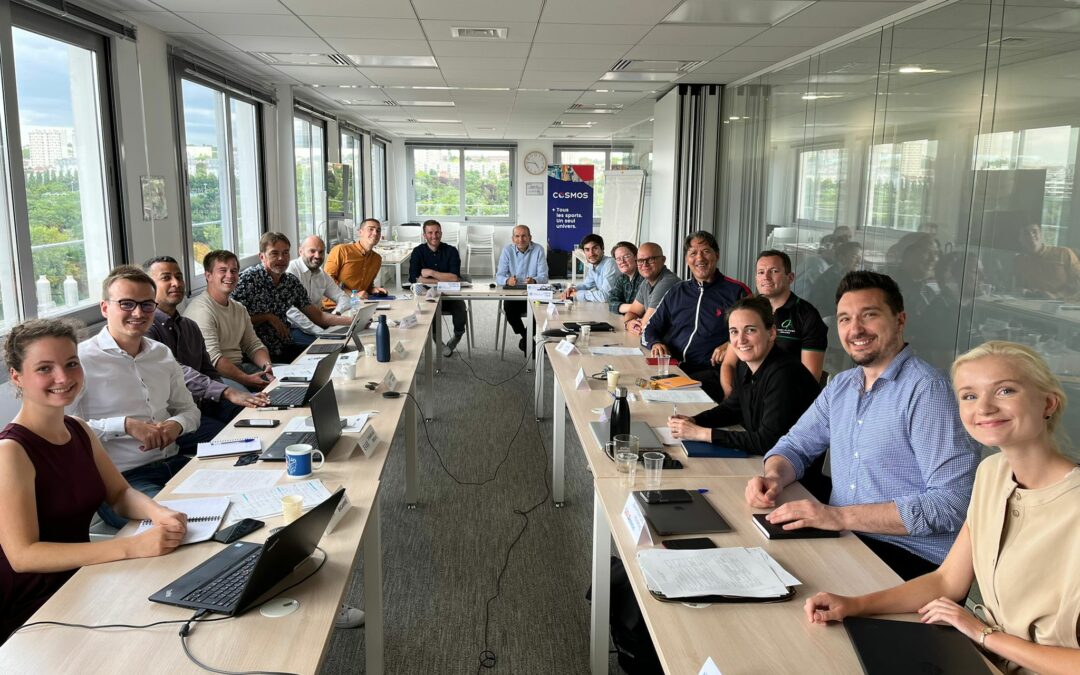
On 7-8 July 2022, the Social Dialogue in Europe for Professional (SDE Pro) Sports project kick-off meeting took place in the offices of COSMOS (Association of Sport Employers in France) in Paris, France. SDE Pro Sports is a 2-year project co-funded by the EU that will run under the Support for Social Dialogue programme. It aims to contribute to the development of social dialogue between employers and employees in professional sport in the EU.
The partners to the project are EU Athletes, the European Association of Sport Employers (EASE) and the German Sport University of Cologne.
At the kick-off meeting, there first was a presentation of the SDE Pro Sports project and its background. The participants also discussed the methodology, advancement and publicization of the upcoming mapping phase of national collective agreements in professional sports in Europe. A number of members of EU Athletes and EASE were invited to share and compare their experiences on social dialogue in their respective countries, as well as reflect on a common ground for social dialogue in Europe. The members invited by EU Athletes were AJFS (Spain), AJFSF (Spain), GIBA (Italy), LI (Iceland), RPI (Ireland), and SSS (Slovenia).
More information about this new project is available here.
Jun 27, 2022
EU Athletes is a partner to ‘Strengthening Athlete Power in Sport’ (SAPIS), a project co-funded by the Erasmus+ programme of the European Union. SAPIS strives to strengthen athletes’ influence and representation in sport through increasing the democratisation of sports governance and management. This is important considering that athletes are often not allowed to participate effectively in decision-making processes within their own sport.
The project, which runs from 1st of January 2020 until 31st of December 2023, is coordinated by Play the Game. Project partners include both athlete representatives and academic researchers coming from the Netherlands, Finland, Spain, Wales, and Slovenia.
When asked about EU Athletes expectations on SAPIS back in 2020, Paulina Tomczyk, Secretary General of EU Athletes, expressed:
“The importance of athlete representation in sports governance cannot be overstated. By working in partnership with athlete organisations, sports bodies can assure that the rights and interests of key stakeholders are respected so sport is being developed in a way that is beneficial for athletes and all involved. I believe the SAPIS project can help athletes realise the potential of their collective power to stand up for their rights and improve sports governance.”
On 26th of June, the SAPIS steering group met in Odense, Denmark, for a 7th meeting. The steering group meeting was arranged in connection with Play the Game 2022. During the meeting, the steering group looked over the progress of the project and discussed the outputs that are still to be developed. At current, the project partners are writing a report on a survey conducted of representative organisations for athletes. A session about SAPIS will also be held at said Play the Game conference.
More information about SAPIS is available here.
