Jun 27, 2022
EU Athletes is a partner to ‘Strengthening Athlete Power in Sport’ (SAPIS), a project co-funded by the Erasmus+ programme of the European Union. SAPIS strives to strengthen athletes’ influence and representation in sport through increasing the democratisation of sports governance and management. This is important considering that athletes are often not allowed to participate effectively in decision-making processes within their own sport.
The project, which runs from 1st of January 2020 until 31st of December 2023, is coordinated by Play the Game. Project partners include both athlete representatives and academic researchers coming from the Netherlands, Finland, Spain, Wales, and Slovenia.
When asked about EU Athletes expectations on SAPIS back in 2020, Paulina Tomczyk, Secretary General of EU Athletes, expressed:
“The importance of athlete representation in sports governance cannot be overstated. By working in partnership with athlete organisations, sports bodies can assure that the rights and interests of key stakeholders are respected so sport is being developed in a way that is beneficial for athletes and all involved. I believe the SAPIS project can help athletes realise the potential of their collective power to stand up for their rights and improve sports governance.”
On 26th of June, the SAPIS steering group met in Odense, Denmark, for a 7th meeting. The steering group meeting was arranged in connection with Play the Game 2022. During the meeting, the steering group looked over the progress of the project and discussed the outputs that are still to be developed. At current, the project partners are writing a report on a survey conducted of representative organisations for athletes. A session about SAPIS will also be held at said Play the Game conference.
More information about SAPIS is available here.

Jun 24, 2022
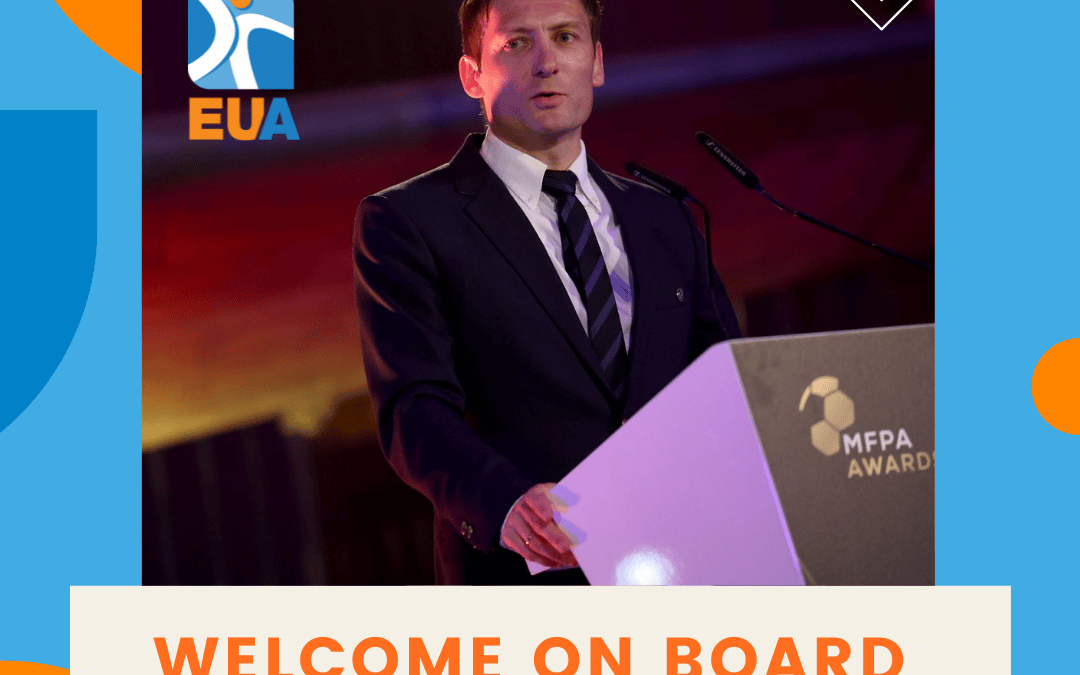
About Joachim
Joachim Walltin is the General Secretary of FIFPRO Division Europe. Prior to taking up this role, the former professional football player was the president of Norwegian player association NISO for 10 years. Joachim has been on the EUA board since 2021.
Q&A
What are you trying to achieve as a Board member of EU Athletes?
“I have a slightly different role than most of the other board members, as I am here representing FIFPRO as the GS of Division Europe. I am here to follow up on the cooperation between our respective organisations, which is important to protect the rights of football players and other athletes in Europe. With my background from NISO, the Norwegian multisport union, I am used to working with other sports and I still have a heart for all athletes and my approach is to create mutual benefits from such a collaboration.”
Why do you think cooperation between FIFPRO and EU Athletes is important?
“FIFPRO and EUA have a joint interest in several areas and for me as the General Secretary of FIFPRO Division Europe, it´s important that we build European alliances. I think we should align our work where possible and collaborate with the objective to strengthen both organisations. We have to continue promoting and protecting the athletes as workers and ensure their rights are being recognised and respected.”
In your view, what has been the most important achievement of EU Athletes during your time on the Board?
“I haven’t been too long in the Board, but I must say that what EUA has done together with the speed skaters in the ISU case is a very important job and achievement, which deserves a lot of recognition.”
What is in your opinion the biggest challenge that player associations are facing in 2022?
“From my experience, the player associations face quite different challenges, depending on the domestic conditions and recognition and work with other stakeholders. We see that way too few have managed to conclude Collective Bargaining Agreements and in some countries there is even a lack of Standard Employment Contracts, which should be mandatory to prevent problems and improve the professionalisation in all sports.”
Jun 17, 2022
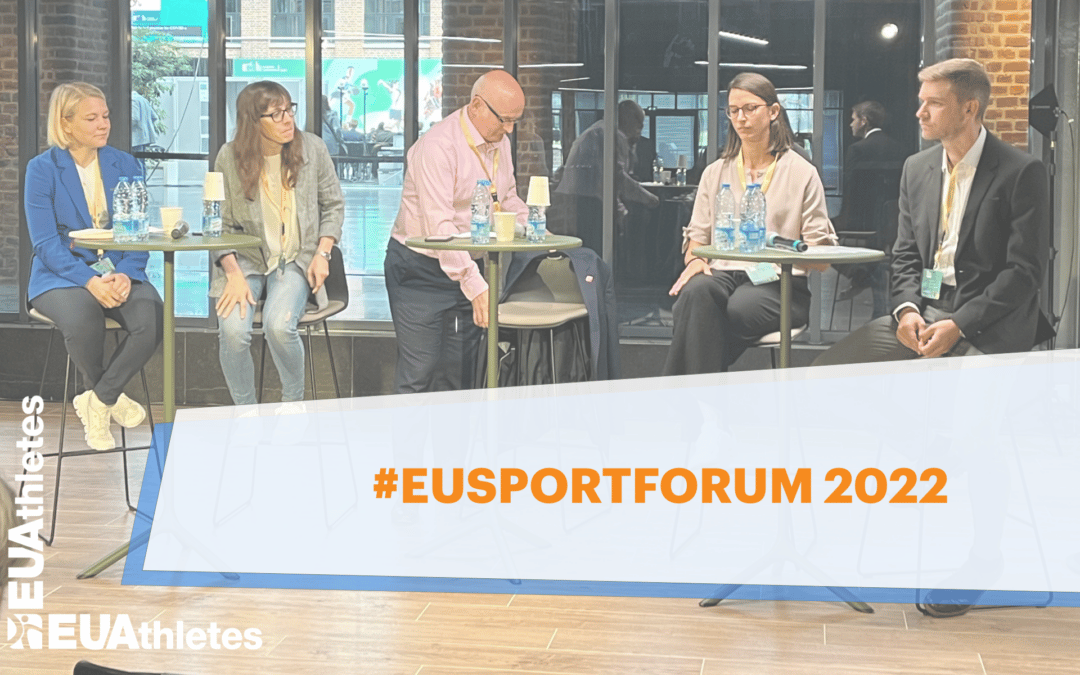
The European Commission and the French Presidency organised the most important annual event in the European sport sector in Lille (France) on 16th and 17th of June. During two days, sports stakeholders from around Europe shared their views on the future of sport policy in Europe.
EU Athletes has participated actively in the discussion, with our Vice-President, Natalia Orive, participating in a panel discussion on athletes empowerment on the second day of the Forum.
“If you’re not bargaining, your begging” Natalia Orive, EU athletes Vice-president.
During her presentation she highlighted the importance of independent athletes association in the decision making processes as a way to improve the governance of sport organisation and empower athletes:
“We have seen some progress in the recent year but the situation is still not ideal. The Covid pandemic is a clear indicator of athletes’ empowerment. In a lot of sports and countries basics health and safety measures were not even discussed with players. In 2022 it’s not acceptable anymore” and she added “EU Athletes has long been striving to ensure that the athletes we represent enjoy the same fundamental rights as any other European citizen and worker. This includes the rights to freedom of association and collective bargaining, which together lay the foundation for athlete empowerment”.
Jun 14, 2022
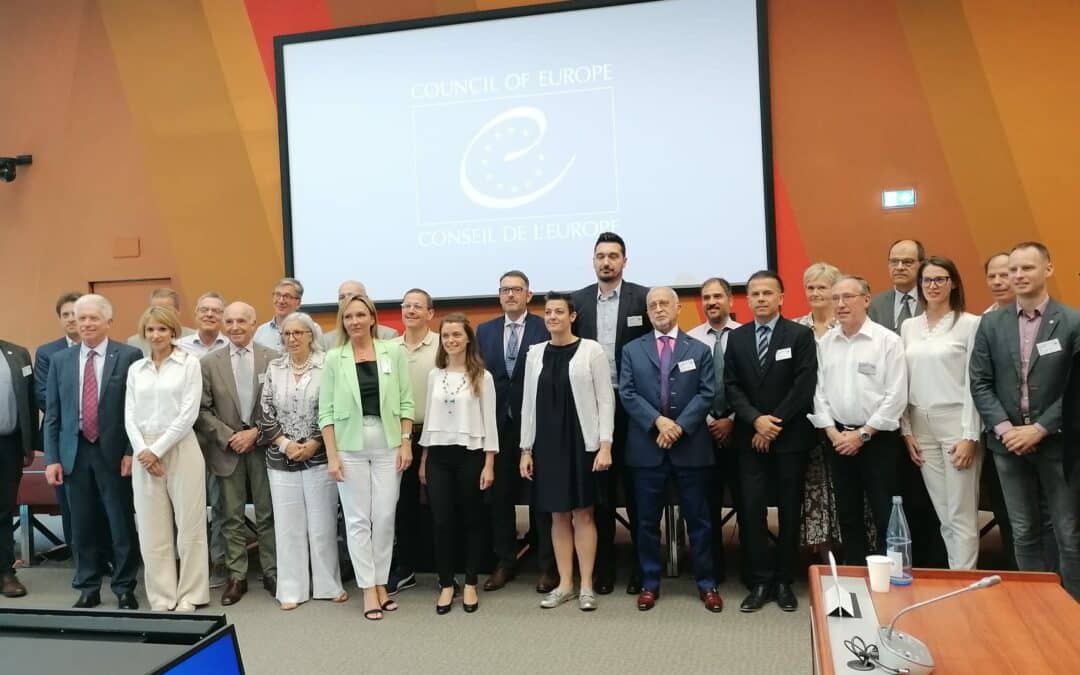
Monday 13th and Tuesday 14th of June EU Athletes participated in both consultative committee meeting and governing board of EPAS. This first in person meeting after 2 years of pandemic was a unique opportunity for the organisation to present our ongoing work in certain area where the Council of Europe is active (fight against online abuse, protection of children and match-fixing).
This in person meeting also the opportunity to celebrate the 15th anniversary of EPAS.
Jun 6, 2022
Today EU Athletes publishes the results of its research on the long-term impact of the Covid-19 Pandemic on Players and their Player associations in Europe.
This study is the continuation of the EU Athletes survey that was conducted amongst EU Athletes members at the early stage of the pandemic in 2020 (can be found here).
For EU Athletes Vice President, Natalie ORIVE, the results of this second survey shows that even if the pandemic is almost behind, it still has an important overall impact on Athletes in Europe “It was clear in our mind that the effects of the pandemic could only be measured in the long term, that’s why we wanted to have a clear evaluation of the situation two years after the pandemic has started”.
Over the last 2 years the work done by the Player Association for their members was structurally modified. With limited access to the players, no face to face interaction and majority of the work conducted online the consequences could have been dramatic. The results show that only 22% of the association have experienced a loss in their membership while at the same time 74% of them experienced an increase in a demand for services from the period compared to before the pandemic.
“In a really insecure time for players it’s great and encouraging to see players reaching out to their Player Association for help” Natalia Orive, vice-president of EU Athletes.
Structural governance problems, the involvement of the Player Association.
The report further revealed a number of issues of concern that need acknowledgement and drastic countermeasures. These include, among other things, a lack of respect for players’ rights and interests, a deprivation of players’ workers status and proper contracts, and insufficient involvement of player associations in decision-making processes. 48% of the player association reported a “lack of involvement in the decision making process” while leagues and federations were taking measures that would directly affect players (scheduling of the season, pay-cuts, health and safety protocol…).
58% of the members association have noticed a decrease in players salary during the pandemic period. “This situation is really alarming for athletes, especially in less professionalized sports” said Natalia Orive.
Mental health and women sport 2 areas of concern.
“We knew that COVID-19 would affect the mental health of athletes. Now we have the data that corroborate this statement” said Natalia Orive “From one day to the next athletes were going from permanent activity to nothing. It’s pretty much as if all the athletes in Europe retired on the exact same day, with no or little vision of what would come next. 70% of our members have reported a negative impact on their mental health. It’s really alarming and concrete measures should be taken rapidly. Mental health should be properly addressed from now on” she added.
While some player associations reported having witnessed more sponsoring and more media attention being brought to women’s sport, it remains a fact that the area is of low priority as 67% of the respondents received “no targeted support for women”. This is alarming considering that such support is necessary in protecting the significant progress women’s elite sport has seen over the past years.
EU Athletes will continue to work on a post-pandemic evaluation of the individual situation of its members to ensure that the mentioned issues of concern (as well as additional issues listed in the report) are duly addressed both at the European and national level.
You can download the full report here.
For any inquiries please contact EU Athletes : info@euathletes.org
