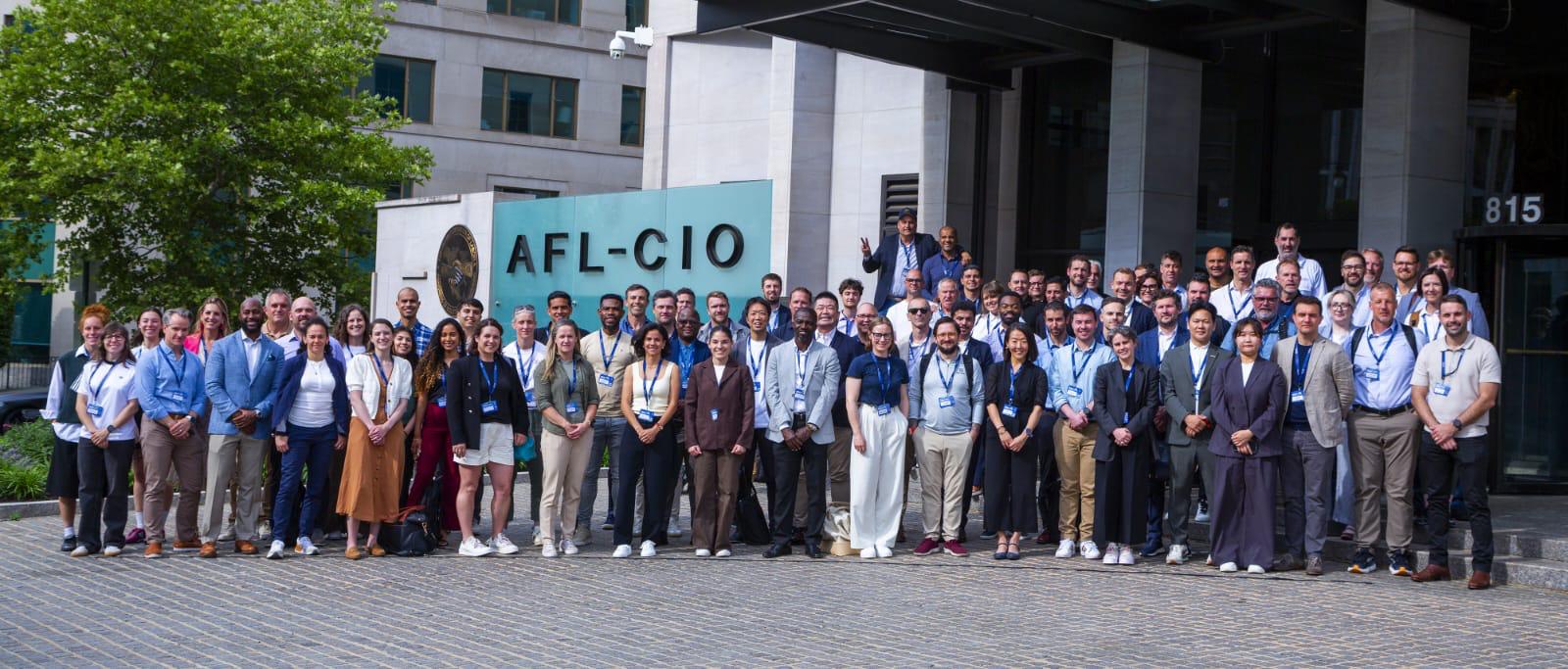
Last week, Dr Emma Burrows was in Washington DC at the World Players Summit, an inaugural player-led global convening focused on advancing athlete representation and advocacy across sport.
RPI’s Player Development Manager for Leinster Rugby, Emma is also the Lead Researcher on Tackle Your Feelings Europe, an EU co-funded project being led by the European Athletes and Players Association.
Based on your conversations, what is the biggest issue facing athletes across the world in your view?
In every conversation, across every sport, the same thread ran through: athletes are workers. They are injured at work, they are increasingly monitored at work, and yet the systems that govern their working lives were not built with them in mind.
The World Players Association have successfully collaborated with the International Labour Organization (ILO) to secure historic global guidelines protecting the fundamental labour rights of professional athletes. However, the gap between what exists on paper and what players actually experience day to day is still significant.
What lesson(s) from another sport should rugby be paying closer attention to?
Two things stood out.
The first is from the AFL Players’ Association’s wellbeing service model. They have four dedicated psychologists to triage, a network of 600 practitioners, and players are offered a choice of three matched options. Average sessions per player have gone from three/four to eight/nine after offering the choice. The difference isn’t the size of the network, it’s the quality of the match and the trust that follows from it. That’s directly relevant to how we think about our own wellbeing infrastructure.
The framing of lifespan, healthspan and joyspan from Thom Mayer was also one of the most useful frameworks I heard all week with regards to long-term health. Rugby has done a lot on concussion but we haven’t yet made the shift to brain health as a protective, proactive system.
What was your biggest takeaway from the week in Washington?
Collective action requires presence, not just alignment.
One of the sharpest lines I heard all week was that you can’t let there be daylight between the association and the players. The associations doing this well are physically present in players’ lives through Rookie Camps, on-site PDMs, and being the trusted first port-of-call.
Care to share a personal highlight from the trip?
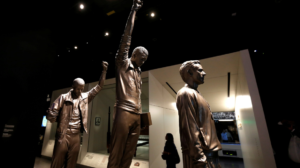
The sports display in the National Museum of African American History and Culture was incredible. I loved being able to shop in the local artists market there too.
Progress has been made, but do you think players have enough influence over the decisions that affect their careers, or is there still a significant gap between governing bodies and players?
There is still a significant gap, and it is not evenly distributed. The sports and associations with strong CBAs, dedicated PDMs, independent wellbeing infrastructure and genuine player voice in governance are pulling ahead. The ones without those foundations are vulnerable, and the union-busting session on Day 2 made clear that the pressure on those foundations is increasing, not decreasing.
How does rugby in Ireland compare?
The picture here is a bit mixed. We have made real progress in terms of player welfare infrastructure. The relationship between RPI and the IRFU is more collaborative than adversarial, which baffles some colleagues in other countries. But collaboration is not the same as influence. Players being consulted is not the same as players having meaningful power over the decisions that shape their careers. There is more work to do on that distinction.
One change you think that would most improve athletes’ working lives?
I’d like to see parents rights moved out from under the heading of Equality. I think as long as maternity leave is framed as a Women’s right concern and filed under Equality it won’t progress any further. If we treat it as something that affects men and women, then I think we’ll see real parity.