Nov 29, 2019
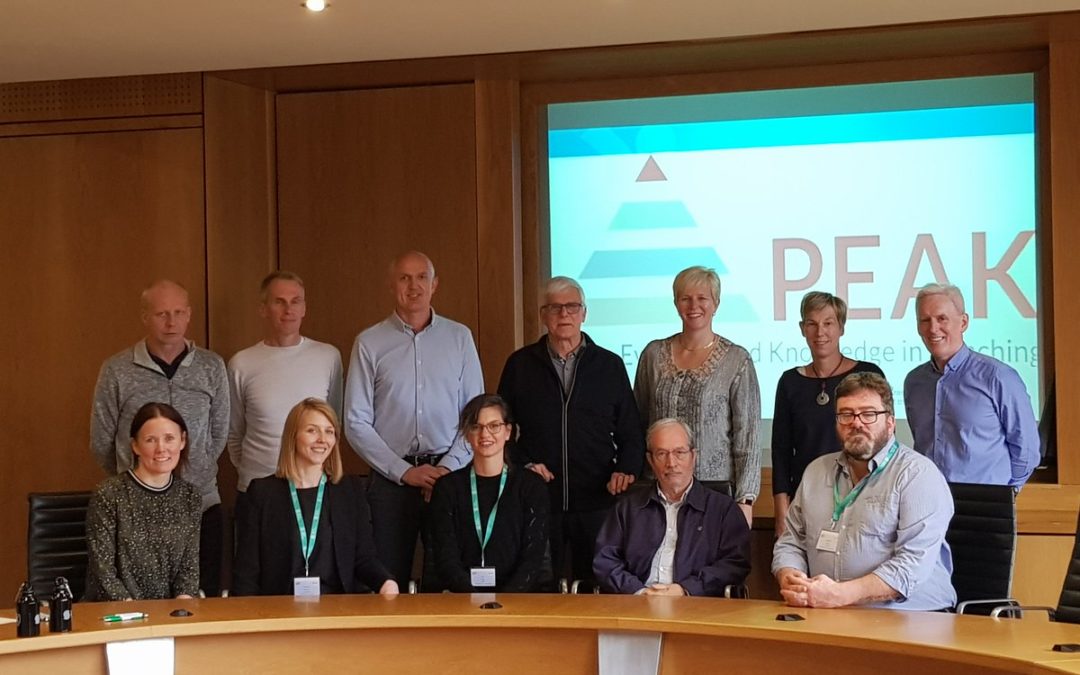
We are a proud partner of PEAK, an international project coordinated by the International Council of Sport Science and Physical Education (ICSSPE), aiming to develop coaching policy recommendations for use by sport federations, coaching bodies and governments. EU Athletes is collaborating with a unique consortium of expert partners, including the International Council for Coaching Excellence (ICCE), German Sport University Cologne, Finnish Olympic Committee, Sport Ireland Coaching, Swiss Federal Institute of Sport, and the Foundation of Sport Education and Information in Estonia to offer a comprehensive portrait of coaching and coach education across Europe and beyond. PEAK started on January 2019 and it is planned to run until December 2021.
The main objective of the project, founded by European Union ERASMUS+ programme, is to promote and support good governance in sport, focusing on four pivotal key aspects:
- The coaching system at the organisational and national levels (education, licensing, recruitment, ethics, representation, working conditions, quality assurance);
- Voluntarism in coaching;
- Opportunities for women in coaching;
- The regulation of coaching.
The project will be led by 6 crucial questions about new policies and their decision-making process in Europe, outlining the roles, responsibilities and status of coaching; as well as going through best practices to include coaching development in sports organizations’ strategies, to increase opportunities for women and to enhance the effectiveness of good governance measures.
The final result of the project consists in the production of 7 documents that will go beyond the 6 guiding questions to provide evidence based foundation for the project; determine criteria for inclusion of the examples of good practice; gather examples of coaching policies in European countries; present model policies related to the different elements of a coaching system and a set of policy recommendations; support organizations to assess the current status of their coaching system and related policies; provide European sport federations, governments and coaching organizations with a recommended process to collaboratively develop coaching policy.
Check out the brand new website at www.peak-coachingeu.com for updates and make sure to follow PEAK on Twitter and Facebook

Nov 20, 2019
EU Athletes, as a partner in Integrisport Erasmus+ project, took part in the event in Budapest in order to talk about player unions role and work when it comes to fighting against match-fixing. During the 3-day training organized specially for members of the Hungarian Police, as well as the National Tax and Customs Administration, the Hungarian Prosecution Service and judges of the Hungarian Criminal Court, participants had an opportunity to discuss openly sport manipulation and match fixing and how this phenomenon has been affecting Hungary.
International experts including the Vice Federal Prosecutor of the Belgian Federal Prosecution Service and representatives from the EU Athletes and Global Lottery Monitoring System (GLMS) and from the coordinator of Integrisport Erasmus+, CSCF-Foundation for Sport Integrity. animated the exchange. Their contributions were accompanied by national expertise from the Hungarian Football Federation, the Hungarian Football Player’s Union, the Hungarian Lottery, Szerencsejáték Zrt, the National Bureau of Investigation and the Hungarian Prosecution Service.
The Hungarian Police and CSCF-Foundation for Sport Integrity also informed the participants of the activities of the Hungarian National Platform related to the Council of Europe Convention on Manipulations of Sports Competitions including international co-operation.
As Lt. Colonel Zita Zmolnik, Deputy Director of the National Investigation Bureau, said in her opening speech: “National and international law enforcement and judicial co-operation, and the common thought of relevant public stakeholders and the private sector, are vital in order to successfully fight against this special type of crime phenomenon.” In order to combat sport manipulation, law enforcement and judicial authorities need to be prepared. This is where Integrisport Erasmus+ has an important role: by providing awareness raising to law enforcement agencies, which is crucial to achieve this aim.
Norbert Rubicsek, director of CSCF and Integrisport Erasmus+ project manager added, “Law enforcement agencies and judicial authorities are the primary stakeholders involved in the investigative and court phases of criminal law cases of manipulations of sports competitions. It is therefore extremely important that on the one hand they are well prepared and informed and on the other hand, that other stakeholders fully understand the role of these key stakeholders. Law enforcement and judiciary are the link to completing the chain in a sports manipulation criminal case and are also a vital link in identifying legislation that needs to be in place to effectively combat manipulations of sports competitions.
The Integrisport Erasmus+ awareness raising sessions in each partner country give law enforcement officers and judicial authorities the possibility to better understand and tackle the dangers of sport manipulation to sport and the society. Project partners include Cyprus Police, Finnish Center for Integrity in Sports (FINCIS), Rapid Response and Special Police Force – Hungary, National Tax and Customs Administration – Hungary, Ministry of Security and Justice – the Netherlands, The Department of Physical Education and Sports – Lithuania, Ministry of Justice – Judicial Police – Portugal, Presidium of the Police Force, Ministry of Interior – Slovak Republic, GLMS – The Global Lottery Monitoring System, EU Athletes, Aix-Marseille University – Centre of Sport and the coordinator, Stichting CSCF – Foundation for Sport Integrity and the Council of Europe (CoE) as a supporting organisation. Integrisport is also a partner project of the KCOOS+ project of the CoE.
The next awareness raising session will be held in Vilnius in December 2019.
For more information, please visit:
Oct 11, 2019
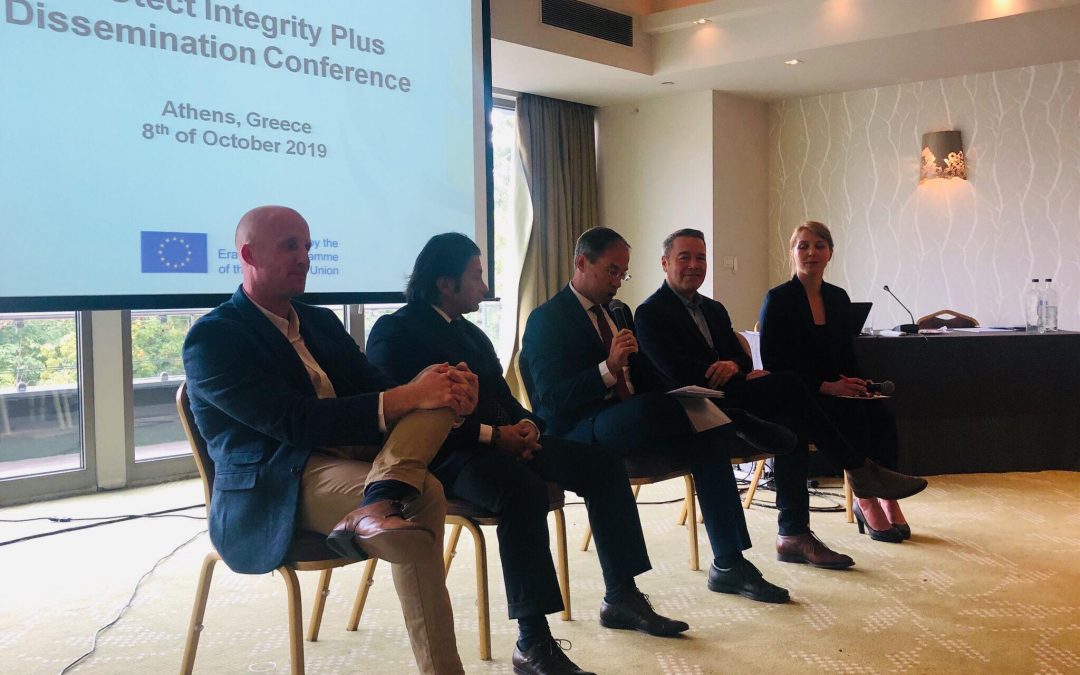
With our Erasmus+ PROtect Integrity Plus project concluding by the end of the year, a final event has taken place in Athens, Greece on 8th of October to share the results and outputs of the project. The conference was attended by player associations and some of the key stakeholders in the fight against match-fixing which was a great opportunity to discuss the progress and further cooperation needed.
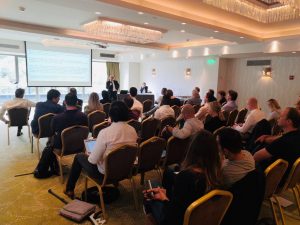
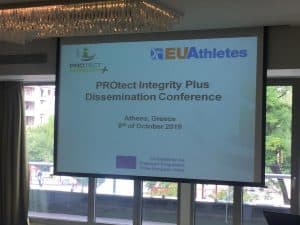
PROtect Integrity is a campaign started back in 2010 in cooperation with betting operators, in order to educate players about the integrity and risks of match fixing. Over the years a number of different projects have taken place under the banner, each project building up on its predecessor. PROtect Integrity Plus specifically aims to implement the Red Button reporting app, initially developed by Finish Football Players Association JPY and FIFPro, in 7 different countries and 5 sports, through the work of 8 player associations cooperating with national stakeholders.

In order to see how the match-fixing can affect the careers and lives of athletes, the participants have he from Samir Arab, Maltese football player banned for 2 years for not reporting an approach and Roy Vermeer from FIFPro who was representing Samir at the appeal case in CAS. The story highlights the need for more education, prevention and focus on governance of sport organizations as the sanction of Samir, considering all elements of the case, was widely regarded as unfair and disproportionate.
 Subsequently, the results of the project so far were presented, including the Red Button app, research led by prof. David Forrest from the University of Liverpool and the grassroots sport video promoted by player associations during the European Week of Sport in order to broaden the reach of the campaign and raise awareness about the match-fixing. Player associations representatives from AJFSF (Spanish futsal), Rugby Players Ireland and PASAP (Greek volleyball) discussed their experiences and views following the implementation of the project. The case study of a fruitful cooperation between the National Platfrom and the player movement in France was also presented.
The conference concluded with a discussion panel with Matt Fowler (IBIA), Sergio D’Orsi (Europol), George Mavrotas (Greek Government), Mikhael de Thyse (Council of Europe) and Paulina Tomczyk (EU Athletes). The speakers discussed the cooperation between stakeholders in the new environment after the entry into force of the Macolin Convention.
For Paulina Tomczyk, the General Secretary of EU Athletes: ‘I find it really positive and promising for the future that some the main stakeholders in the fight against match-fixing joined the discussion and recognized the essential role that the athletes have to play in this process. We are looking forward to continuing the constructive cooperation with the key actors to protect the integrity of sport’.

Jul 1, 2019
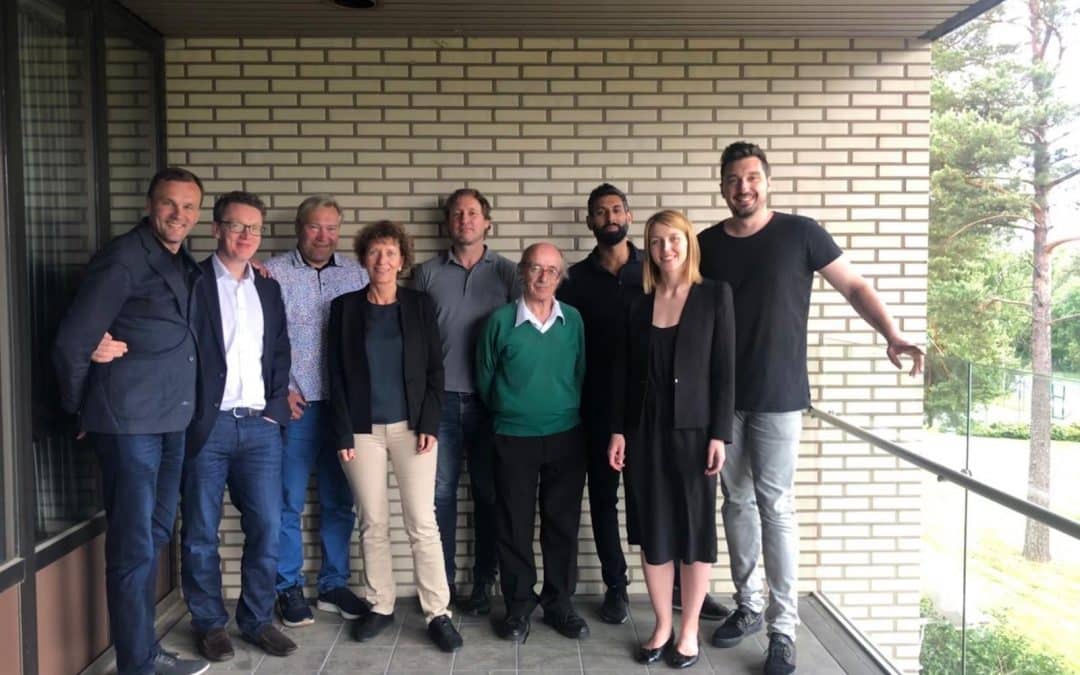
PROtect Integrity Plus staff meeting took place on June 26th in Finland. The aim of the staff meeting was to catch-up on the implementation of the project so far, especially the roll-out of the Red Button App across project partners and to prepare for the upcoming Dissemination Conference which will take place in Athens, Greece, in October.
 Complete actions include a successful social media campaign with #PROtectIntegrity and its peak on the 15th of April #EUSportIntegrityDay that is an opportunity for everyone to show their commitment to fighting match-fixing. The 2018 Code of Conduct for athletes was published on the updated PROtect Integrity website which provides further details about the project. Participants also discussed upcoming and ongoing tasks, particularly research led by prof. David Forrest from the University of Liverpool.

May 8, 2019
EU Athletes took part in the meeting for the European Basketball Player Associations on May 6th, in Milan. Within the scope of the European Commission funded project, “European Social Dialogue targeted initiative: strengthening social dialogue in the professional basketball sector”, the project coordinated by UNI Europa/World Players Association, with EU Athletes involved as an associated partner, brought together the basketball players associations of SNB (France), ABP (Spain) and GIBA (Italy) for this meeting.
The meeting was an opportunity for the players unions to exchange about the challenges and best practices from their respective unions, but also to discuss the entire landscape of European basketball. The meeting was an excellent platform for the sharing of the status quo of basketball players representation in Europe, identify areas for improvement in order to strengthen bargaining power and to map the stakeholder environment while identifying common positions and best practices.
The aim of this ongoing project has been to support organizing and capacity building in the professional basketball player unions, aiming to reinforce the social dialogue in basketball in order to tackle the new challenges of the game in Europe. Project also aims to gain a deeper understanding of the conditions of work, the views and experiences of both men and women basketball players.
The project will run until the end of September 2019 and the next project meeting will take place in June in Spain.
Mar 28, 2019
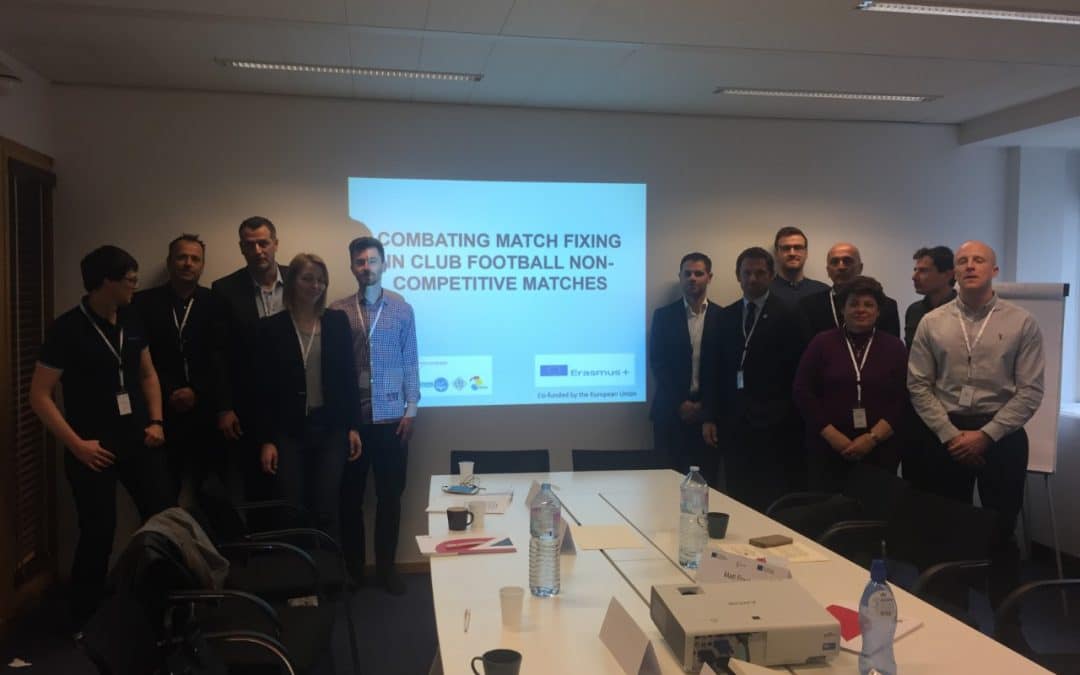
EU Athletes took part in the first steering meeting for the new project coordinated by the University of Nicosia – Combating Match Fixing in Club Football Non-Competitive Matches, at the European Office of Cyprus on Thursday, 28 March. This ongoing project is co-funded by the European Union through the Erasmus+ Program.
The project started this year and will conclude in December 2021, aiming to act upon a growing body of evidence of match-fixing in non-competitive matches at the lower level of the professional club game. There is a genuine need for the issue of fixing in non-competitive football matches to be the subject of serious analysis and for solutions in terms of governance reform and educational tools to be developed to combat the problem.
The project will address these issues by researching and investigating the level of the problem, developing governance and organizational solutions at a pan-European level and educational tools for key targets, notably players, clubs and national associations. The project will benefit other sports at a pan-European level as the findings and solutions developed for football can have significant areas in common with other sports.
EU Athletes, alongside footballers’ unions from Cyprus, Greece and Malta, will provide insight into instances of suspicious approaches of players in non-competitive matches. In addition, EU Athletes will provide support in developing educational tools to warn players and other stakeholders of the dangers posed by match fixers in non-competitive matches.
