
Apr 12, 2023
On the 31st of March, EU Athletes attended the 3rd International Sport4Impact Conference in Milan, Italy. The event gathered over 60 people to discuss the role of finance and private sectors to design and scale up policies and programs for driving social change through sport. The day before, on the 30th of March, EU Athletes also participated in a smaller pre-event to exchange ideas on creating regulations for prevention and countering crimes in sport in strict coordination with the law enforcement agencies.
During the conference, representatives from sport organisations, public bodies, and practitioners explored opportunities to better connect and cooperate with financial and private operators. The event was organised by IIISSS in cooperation with other partners and with the support of UNESCO. Sport4Impact Conference offered a setting for showcasing current cases and tools as well as potential solutions developed by financial and private sectors. Thanks to the organisers Paolo Bertaccini and Sabrina Vettorato for inviting EU Athletes to the conference.
On behalf of its members, EU Athletes advocated for recognition of the role and importance that athlete and player associations have in the prevention of competition manipulation, corruption and other types of wrongdoings in sport.
Player associations support athletes when it comes to their personal development, education, mental health and wellbeing. Education is an essential element in the prevention of crimes in sport, and player associations are the pioneers and leaders in developing and delivering education to athletes. Education is delivered to athletes by people who they know and trust, therefore, it has a greater impact on the athletes.
Player associations also work to engage in collective bargaining, ensure better working conditions and for athletes to practise sport and the respect of their rights, which all together positively influences the overall welfare of athletes and, hence, makes them less vulnerable to take part in competition manipulation. The work of player associations may further help to improve sport governance and the accountability of sport organisations towards the athletes.
At the same time, other sport stakeholders should understand, respect and support the essential role of player associations. Crimes in sport continue to expand to new locations and take new forms. To fight these wrongdoings effectively, national, European, and international stakeholders should come together, exchange their knowledge and practices.
In line with that EU Athletes is currently coordinating an Erasmus+ project PROtect Integrity Online co-funded by the European Union. The project brings together 8 player associations representing 5 major sports and the University of Rennes 2 as the research institution. PROtect Integrity Online focuses on researching, developing, implementing and evaluating the best ways to deliver integrity education to players, particularly related to fighting match-fixing and corruption in sport.
Dec 14, 2022
This morning, the Dissemination Conference of PROLead project has taken place online, gathering over 170 participants from player associations, sport organisations, dual career providers, universities and other organisations. The meeting was an opportunity to share the experiences and results of the project, good practices and discuss the topic of leadership education and player development.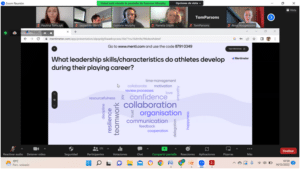
PROLead is a collaborative partnership project co-funded by the Erasmus+ Programme of the European Union and coordinated by European Elite Athletes Association (EU Athletes) with German Sport University Cologne and 8 player associations from different countries and sports (GPA, RPI, PPF, FNASS, UBE, TCA, AJFS, AJJV) as partners. Focusing on the topic of dual careers of athletes, the aim of the project was to enhance leadership skills of athletes, as well as volunteers and staff of player associations, by designing and implementing leadership courses at the European and national level.
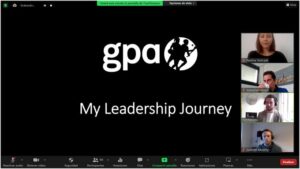
The conference was kicked off by Tom Parsons, the CEO of Gaelic Players Association who shared his leadership journey in a keynote speech. Presentations of the PROLead project by Paulina Tomczyk, General Secretary of EU Athletes, and the project results: Desktop Research and Literature Review of Leadership Education for Athletes by Sebastian Uhrich from German Sport University Cologne and the European Leadership Course and Good Practice Guide by Eamonn Murphy from Gaelic Players Association followed.
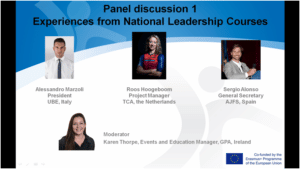
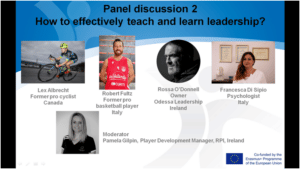
The participants also had an opportunity to hear from two panels. First one, moderated by Karen Thorpe from Gaelic Players Association, focused on the experiences of player associations who designed and delivered National Leadership Courses for their players during the PROLead project. Alessandro Marzoli from Union des Basketteurs Europeens, Roose Hoogeboom from the Cyclists Alliance and Sergio Alonso from Asociacion de Jugadores de Futbol Sala shared insights into their work. In the second panel, two athletes (Lex Albrech and Robert Fultz) and two facilitators (Rossa O’Donnell and Francesca Di Sipio) engaged in a discussion about how to best teach and how to learn leadership, moderated by Pamela Gilpin from Rugby Players Ireland.
The Conference was concluded by Natalia Orive, the Vice President of EU Athletes, who emphasised the work that EU Athletes has been doing to strengthen the leadership within the player association movement, and the importance of helping athletes to realise their potential and strength as leaders.
Paulina Tomczyk, the Project Manager of PROLead, said ‘I am very proud of the work that the project team has completed over the last 3 years. We have managed to bring positive results for the athletes, partner organisations and other EU Athletes members. Today’s conference was also an opportunity to share and exchange with other player associations and various stakeholders, with an ultimate goal to best support athlete development and leadership education.’

Sep 14, 2022
The HealthyLifestyle4All is the European Commission’s initiative that aims to link sport and active lifestyles with health, food and other policies. It showcases the European Commission’s commitment to promoting healthy lifestyles for all, across generations and social groups, noting that everyone can benefit from activities that improve health and well-being
To promote a broad outreach, uptake and ownership of healthy lifestyles across society, the European Commission wishes to involve sport movements at national, European and international level; state authorities (ministries), cities & regions (local governments) and civil society organisations of the EU Member States, the Erasmus+ programme countries, the Eastern Partnership and Western Balkans countries.
“Sport is the day to day life of the athletes we represent” said EU Athletes board member Camille DELZANT “We believe as an organisation that our members have a role to play to help spreading the message across that a healthy lifestyle has a lot of positive impact on people mental and physical wellbeing. You can start small, there is no need for fancy equipments. And she concluded “With our Union members we have gathered a great group of ambassadors to promote this really important message. Follow their tips and it won’t take very long before you see some benefits in your day to day life.
EU Athletes is a proud signatory of the pledge for #healthylifestyle4all initiative. We have committed to develop a communication campaign to raise awareness about the importance of healthy lifestyle, with participation of professional athletes from different countires and sports in Europe. Follow our social media plateforms to discover the videos of our members under the Athletes for #healthylifestyle4all.
Jul 5, 2022
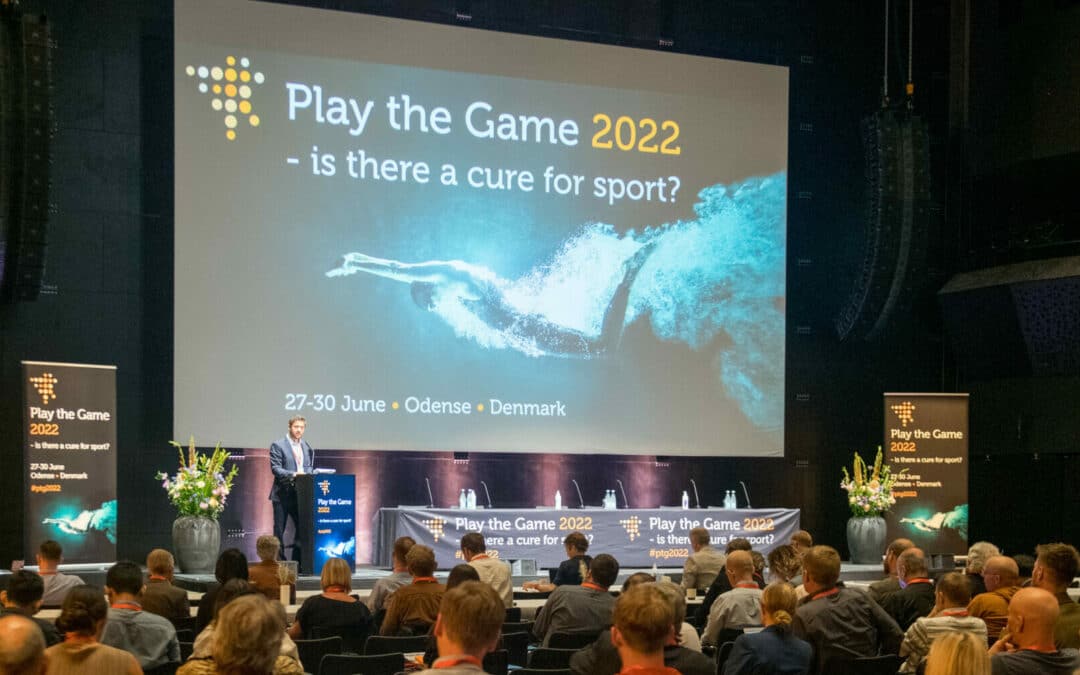
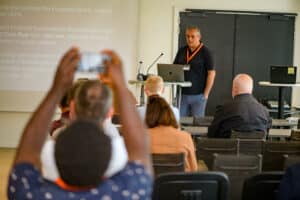
On 27-30 June, EU Athletes attended the 2022 edition of the Play the Game conference in Odense, Denmark. This event brought together various stakeholders in sport to discuss, debate, and find solutions to topical issues and threats facing international sport. Is there a cure for sport? was the theme of Play the Game 2022, which also marked the 25th anniversary of the organisation and its mission to promote democracy, transparency, and freedom of expression in the world of sport.
“Personally, I suffered from the illusion that as soon as the problems of corruption, doping, and abuse were brought into the public domain, someone would start tackling them and they would soon dwindle. Well, here we are, 25 years later, much richer in experience and somewhat poorer in illusions,” Jens Sejer Andersen, international director of Play the Game, in his opening speech.
Issues that were addressed at the 2022 edition of the conference include the rise in athlete activism, the urgent reform of the Court of Arbitration for Sport, and the loss of faith in the anti-doping system after the Russian doping scandal. The panels outlined below were also of particular relevance to EU Athletes.
European Model of Sport – “broken beyond repair”
EU Athletes member Dejan Stefanović, the President of SSS, participated in the panel European Model of Sport: A pyramid, a church, or a world of variety? where the pros and cons of organising sport in a pyramid structure was discussed. There, he stressed that the traditional European Sports Model is “broken beyond repair”. The views of Dejan go in line with the position of EU Athletes, as most recently expressed in EU Athletes Response to the Lobby for a ‘European Sport Model’.
“Athletes’ unions are weak because the European model denies them representation. The revenue distribution systems that are supposed to justify the model are ineffective. In the guise of supporting traditional values, the European model is protecting economic interests and monopolies.” – Dejan Stefanović, President of SSS.
Proposal for independent sports integrity body
Viola von Cramon Taubadel, a German member of the European Parliament for the Green Party, informed the conference about an upcoming proposal from the Green Party bloc to set up a World Anti-Corruption Agency. She expressed criticism towards WADA in this regard and emphasized that we need to start from scratch in building a new independent foundation, based on input from various independent stakeholders.
“We need independent athlete representatives like EU Athletes” – Viola von Cramon Taubadel, MEP Greens/EFA

Photos: Thomas Søndergaard/Play the Game
Apr 16, 2020
Match-fixing is widely recognized as a major threat for today’s sport, undermining the integrity of the game. Because of organized crime involvement, it can put athletes and other individuals at serious danger. If not acted upon, it could destroy sports that we all love because of the loss of public faith that can be caused by corruption. Therefore, any action to promote and sustain the fight of this threat is paramount and beneficial for all the stakeholders in the sport sector, including player associations.
Every year since 2014, the 15th of April is the day dedicated to sport integrity. The #EUSportIntegrityDay, promoted by EU Athletes, is an occasion to show the commitment and make a stand against the against match-fixing. The initiative aimed at raising awareness consists of a social media campaign that can be supported by all stakeholders: public authorities, sports organizations, betting operators and regulators, athletes, coaches, referees, fans and all the other organizations and people who care about the integrity in sport.
This year, the campaign has seen a significant support, with the hashtag #EUSportIntegrityDay reaching over 800.000 potential impressions on social media on he 15th of April alone. Many player associations actively promoted the #EUSportIntegrityDay message, as well as organizations such as the European Commission, The United Nations Office on Drugs and Crime and the International Betting Integrity Association and many others.
For more info about the campaign, you can visit the website.
Jan 26, 2020
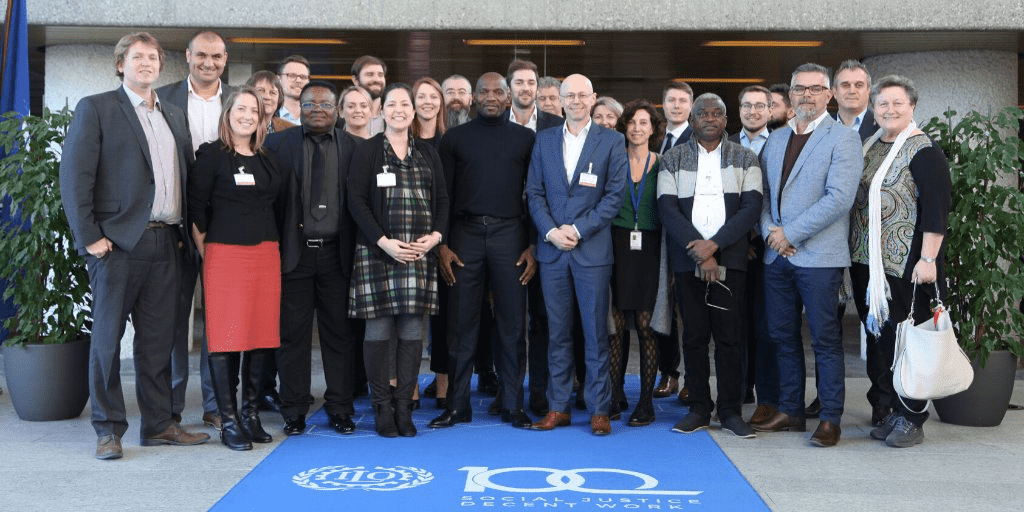
The International Labour Organization (ILO) Global Dialogue Forum on Decent Work in the World of Sport has taken place from 20th to 22nd of January in Geneva, Switzerland. The report ‘Decent work in the world of sport’ was a basis for discussions between the employers (IOE), workers (World Players Association and its affiliates) and the governements. Additionally, sport bodies including the International Olympic Committee (IOC), Fédération Internationale de Football Association (FIFA), Union of European Football Associations (UEFA), the Union Cycliste Internationale (UCI), World Rugby and the Global Association of International Sports Federations (GAISF) have joined the disucssion about how the ILO labour standards apply to the work of athletes.
Athletes are workers and they need to have their fundamental rights protected. This is a key message from the report that includes references to key research from EU Athletes as well as FIFPro, FICA and International Rugby Players, giving an insignt into decent work challenges faced by athletes in different sports around the globe. The main findings include that professional athletes often face issues such as infufficient representation, disguised employment, discrimination, harassement, abuse, late payement of wages and unenforcable contracts as well as serious occupational health and safety risks as well as lack of effective remedy.
The report also acknowledges Universal Declaration of Players Rights (UDPR) adopted by World Players Association and its affiliates as a tool to address the labour and human rights challenges facing athletes. A core pillar of the UDPR is dedicated to labour rights which includes; the right to work, the right to organize and collectively bargain, the right to share in the economic activity of sport, the right to decent fair and just conditions and the right to physical health, mental health and social wellbeing.
Our General Secretary Paulina Tomczyk participated in the meeting as a worker representative alonglisde EU Athletes members Paul Flynn (GPA) and Dejan Stefanovic (SSS) and a number of World Players Association affiliates, with FIFPro General Secretary Jonas Baer-Hoffman leading the delegation. ‘Protecting athletes’ rights as people and workers is the main mission of EU Athletes. The challenges that the players face when it comes to decent work demands actions at national, regional and international level and it is very promissing that the ILO decided to support a dialogue dealing with this important topic.’ she said after the meeting.
After three days of work, the Forum adopted Points of Consensus which will be taken under consideration preparing the further work and possible follow up from the social partners, governements, and other stakeholders when it comes to assuring decent work for athletes.
