Jan 23, 2025
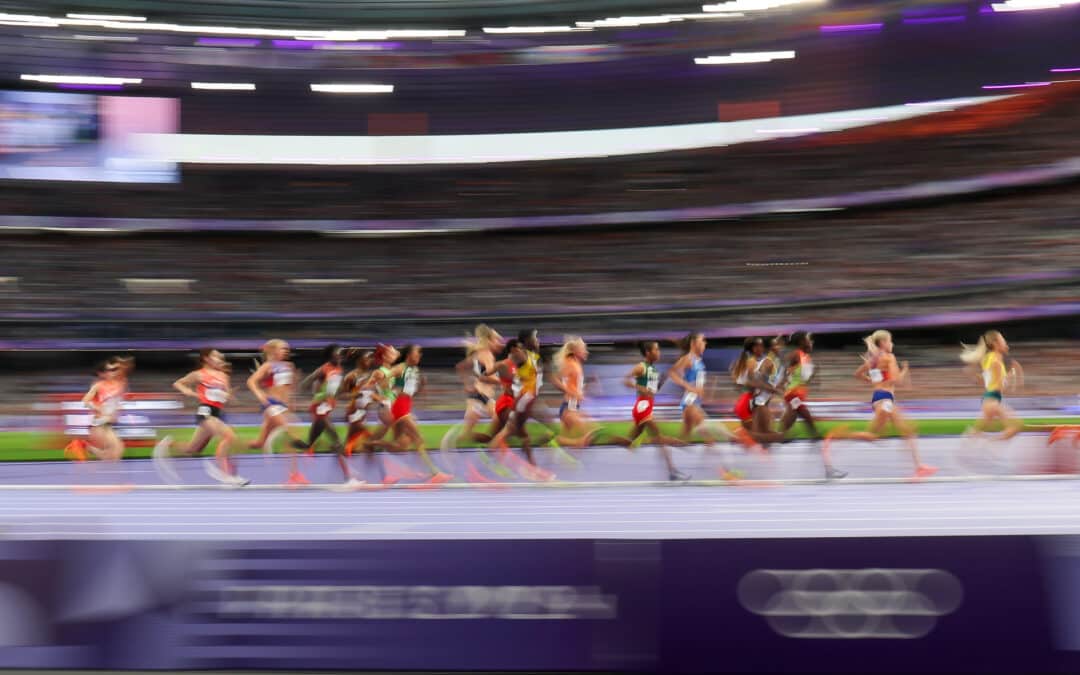
UNI World Players, a sector of UNI Global Union, has carried out the first-ever public poll to assess awareness and attitudes regarding athletes’ rights and representation at the Olympic Games. The poll of nearly 3,200 people from Australia, France and the United States was conducted by Ipsos, a leading global market research firm, in the months following the 2024 Paris Olympics. It shows immense public support for greater compensation for Olympic athletes and increased athlete input in decisions affecting their careers.
The poll underscores that IOC’s actions are out of step with public expectations on athlete rights and representation, highlighting the public’s lack of awareness of the challenges Olympic athletes face. As seven candidates battle it out to become the new President of the IOC, to be decided in March this year, UNI World Players is seeking a commitment to fair treatment for athletes and their fair share of the billions of dollars generated at the Games.
Among the poll’s key findings:
Overwhelming support for fair pay for Olympians
- Across the three countries surveyed, half of respondents admitted they “did not know” whether the IOC shares revenue generated at the Games as a form of payment (directly or indirectly) with athletes. Only 18% correctly recognized that the IOC does not.
- A majority (65%) believe the IOC should share Olympic revenue as a form of payment with athletes (either directly or indirectly). Support is highest in Australia (68%), followed by France (67%) and the United States (59%).
Strong backing for greater athlete agency, including sponsorships
- The overwhelming majority of respondents (73%) were unaware that athletes at the Olympics only have a limited say when it comes to matters affecting their careers.
- A majority of over 60% across all three surveyed countries believe athletes should have an equal say with the IOC in decisions that can affect their careers, with the highest support in Australia (71 per cent), followed by the United States (67%) and France (62%).
- There was also support for enhanced sponsorship freedom. When asked their perspective on whether athletes should or should not be allowed to promote personal sponsors when competing at the Olympic Games, the majority of respondents in each country (USA – 59%, Australia – 57% and
France – 51%) believe athletes should be allowed.
Head of UNI World Players, Matthew Graham said:
This poll shows the public support for change. Without athletes, there are no Olympic
Games, and they deserve to have a stake in the enormous wealth they generate.
The next president must ensure the IOC acknowledges athletes’ hard work and
dedication by paying them their fair share, and giving them an equal say in all
matters affecting their careers, wellbeing and livelihoods.
At the pandemic affected Tokyo Olympics, the IOC produced revenues amounting to US$370,000 for each of the 11,300 competitors, and it is estimated these figures will be higher again in Paris. Yet athletes only directly share in a meagre 0.6% of the revenue they generate via the ‘Olympic Scholarship’ programme. This inequity is forcing many athletes to leave their sports prematurely with significant numbers facing mental health
challenges due to financial difficulties.
UNI World Players notes this polling is another reminder that the IOC needs to fully embed the fundamental rights of athletes in its governance and business model if it is to keep up with the demands and expectations of all stakeholders in the modern professional sport era. To take these steps, the IOC must build meaningful athlete engagement upon a foundation of respect for the rights to organize and collectively bargain, allowing for an equal say on all matters affecting their careers, wellbeing and livelihoods. As proven by other sport globally, says UNI World Players, it will be a win both for athletes and their sports.
Dec 1, 2022
As an affiliate of the World Players Association, EU Athletes supports today’s launch of “Establishing Effective Safe Sport Entities”, a concise guide on the key principles and essential functions of entities established to address and remedy the scourge of abuse in sport. Developed together with The Army of Survivors and the Sport & Rights Alliance, the guide provides sports bodies, governments, player associations, civil society organisations, and other stakeholders with a clear benchmark to ensure safe sport entities are able to prevent, investigate and respond to abuse in a manner that protects the safety, humanity, dignity and voice of impacted athletes.
Recent and continuing revelations of endemic, appalling and systemic abuse of athletes, often fostered by enabling cultures of sporting norms, nepotism, cover-up, and retaliation, have triggered a rush to establish safe sport initiatives. While potentially an important step , these processes commonly have significant shortcomings in purpose, culture, capacity, expertise, and transparency – often exacerbating harm for victims and survivors. Athletes turning to such entities report a lack of support and safety, an absence of trauma-informed approaches, ineffective reporting procedures, a legalistic and adversarial system of dispute resolution, and gaps when it comes to meaningful reparation and remedy.
Athlete trust – essential to the success of any safe sport initiative – has too often been destroyed by being forced into a system principally designed to protect the reputation of the sports body itself as opposed to identifying the justice needs of victims and systemic causal factors. Some sports bodies and governments have made the dangerous assumption that the already problematic sports integrity framework – designed around challenges such as anti-doping and match-fixing – is capable of addressing the particular challenge of abuse and the sporting environments which enable it.
Based on these experiences and coupled with the knowledge of experts in the field of trauma and abuse, the guide articulates six key principles that need to be embedded in the establishment and operations of safe sport entities to ensure that initiatives can deliver justice and support for survivors:
- Human Rights-Based
- Survivor-Centred
- Independency & Accountability
- Safety & Accessibility
- Meaningful Stakeholder Engagement
- Effective Remedy
In addition, the guide identifies five essential functions that such entities need to fulfil in order to respond to the needs of survivors and drive the necessary systemic change to achieve the stated safe sport purpose:
- Support
- Reporting
- Investigation
- Remedy
- Prevention
The released guidance comes at a critical point in time, as FIFA is looking at establishing an structure on a global and multisport level, and other national-level initiatives are underway in several countries under the guidance of national governments.
EU Athletes General Secretary Paulina Tomczyk said:
“Every case of athlete abuse is one too many. Sport organisations, governments and other stakeholders need to recognize their responsibility and deal with the systemic abuse in sport head on. Establishing safe sport entities is a step in the right direction, but their structure and functioning need to be fit for purpose. With the Safe Sport Entity Guide, the player association movement is showing its committed to being a part of the solution and making sure that the protection of rights and integrity of athletes is a non negotiable priority.”
World Players Executive Director Brendan Schwab said:
“Abuse in sport is continuing to destroy the lives of thousands of players around the world. We cannot wait for the system to come up with a solution, as the system is part of the problem. There is an urgent need to establish new and carefully designed structures that can deal with these cases and meet the individual, collective and systemic justice needs of victims, survivors and athletes generally. This guide provides clear criteria to ensure that those initiatives can be effective, safe, trauma-informed, survivor-centred, and deliver the systemic change needed.”
The Army of Survivors Executive Director Julie Ann Rivers-Cochran said:
“While we agree that current safeguarding and reporting systems need to be revisited in order to prioritize athlete safety and wellbeing, our hope is that new entities being created are taking the right measures into account. By utilizing this guide, organizations have principles and key functions that will aid them in creating transparent and survivor-centered processes.”
Sport & Rights Alliance Director Andrea Florence said:
“To move forward, it is important that we learn from mistakes in the past. For too long we have seen processes and systems built to protect sport and its reputation. We need to finally start to focus on those most affected by the current failures: the athletes and survivors. For the effectiveness of any safe sport institution, it is absolutely critical to be based on meaningful, nonexploitative, safe and trauma-informed consultation with survivors.”
Establishing Effective Safe Sport Entities – Guide
Original press release by World Players Association
May 8, 2019
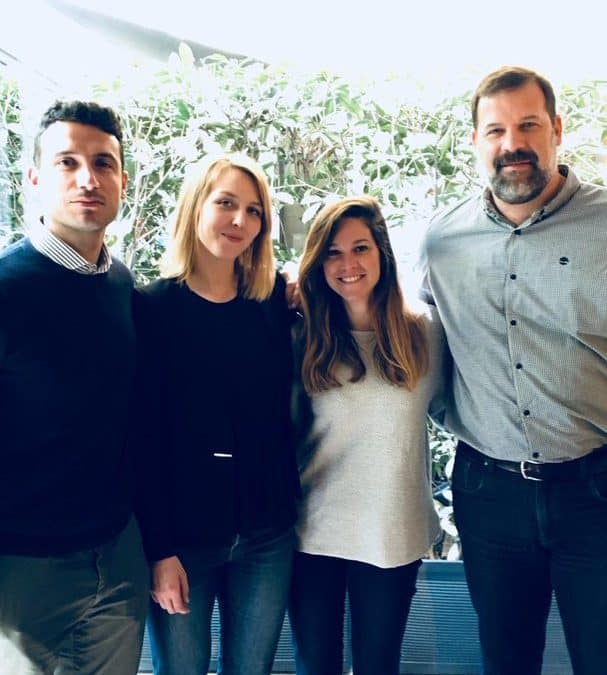
EU Athletes took part in the meeting for the European Basketball Player Associations on May 6th, in Milan. Within the scope of the European Commission funded project, “European Social Dialogue targeted initiative: strengthening social dialogue in the professional basketball sector”, the project coordinated by UNI Europa/World Players Association, with EU Athletes involved as an associated partner, brought together the basketball players associations of SNB (France), ABP (Spain) and GIBA (Italy) for this meeting.
The meeting was an opportunity for the players unions to exchange about the challenges and best practices from their respective unions, but also to discuss the entire landscape of European basketball. The meeting was an excellent platform for the sharing of the status quo of basketball players representation in Europe, identify areas for improvement in order to strengthen bargaining power and to map the stakeholder environment while identifying common positions and best practices.
The aim of this ongoing project has been to support organizing and capacity building in the professional basketball player unions, aiming to reinforce the social dialogue in basketball in order to tackle the new challenges of the game in Europe. Project also aims to gain a deeper understanding of the conditions of work, the views and experiences of both men and women basketball players.
The project will run until the end of September 2019 and the next project meeting will take place in June in Spain.
Jun 21, 2018
UNI Global Union World Women’s Conference and World Congress has taken place in Liverpool 14-20th of June 2018 and brought together almost 2 000 delegates from all around the World. Being affiliated to UNI Global Union as well as its regional organization UNI Europa and the sport sector World Players Organization, EU Athletes is a part of a federation of 20 million service workers from more than 150 countries. It was an opportunity to define priorities and strategy for the years to come, to recognize the progess and the exceptional achievements but also a moment of important changes in the leadership.
Ruben Cortina, the President of UNI Americas was unanimously voted in as the new president of UNI Global Union, replacing Ann Selin who has been President of UNI Global Union for four years. Christy Hoffman has been elected as the new General Secretary, taking over from Philip Jennings, who led UNI Global Union for 18 years. Patricia Nyman was elected as President of UNI Women, following the retirement of Denise McGuire who was steering it for a decade.
EU Athletes General Secretary Paulina Tomczyk had an opportunity to share the challenges and the important work that the organization is doing in the field of women’s sport and gender equality with the World Women’s Conference.
Sep 7, 2017
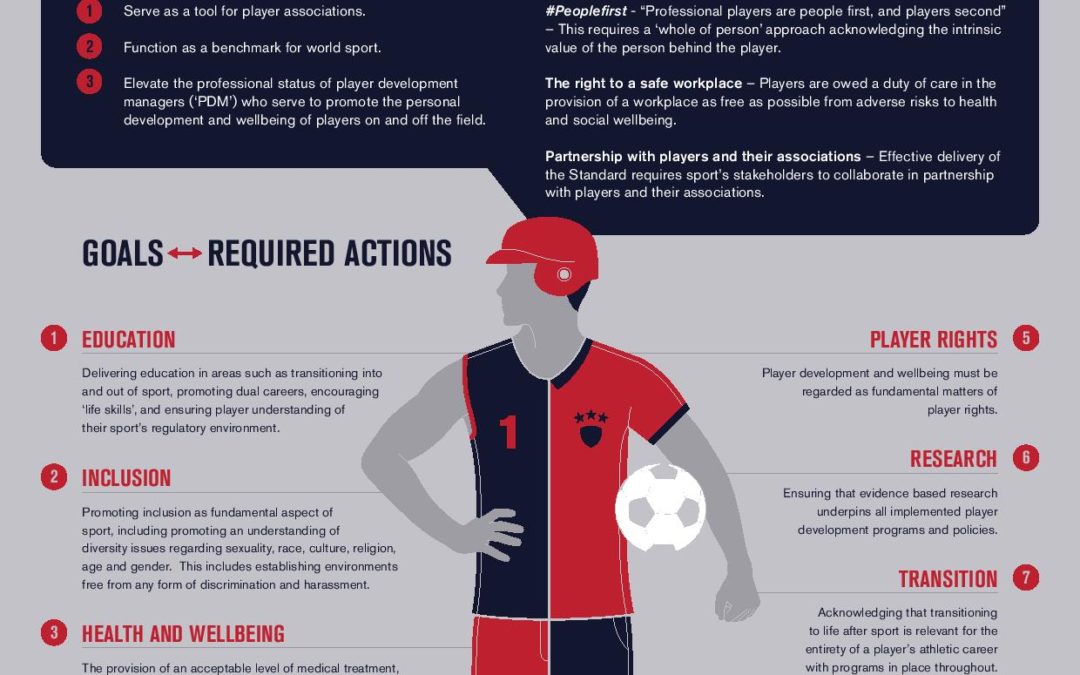
The World Players Association today launched a landmark standard to underpin holistic player and athlete development and wellbeing across the globe. The World Player Development, Wellbeing, Transition and Retirement Standard, Paris 2017 (Standard) addresses the acute need for sport to raise its investment in players as people as well as athletes.
Being thrust into an ever-more demanding and competitive environment at an increasingly young age, players can often struggle to develop an identity outside of their sporting personas. This can negatively impact players’ mental health, resilience and ability to successfully transition during and after their sporting careers. It can also substantially undermine athletic performance.
To address these issues, the Standard places the personal development, wellbeing and safety of players at the centre of sport. It:
- Sets the benchmark for the world of sport regarding the value it places on developing players and athletes holistically
- Serves as a tool for player associations in the negotiation and design of player development and wellbeing programs in partnership with sporting bodies, leagues and clubs
- Elevates and enhances the essential role of Player Development Managers (PDMs) in sport. PDMs, who are commonly employed by player associations, excel in tailoring personal development and wellbeing programs to the individual needs of each player.
“For the first time, world sport has a comprehensive set of minimum conditions to safeguard and resource the personal development and wellbeing of professional athletes. The Standard will both improve and expand player development and wellbeing programs, a key area in which many sports can invest more,” said Brendan Schwab, Executive Director of the World Players Association.
The Standard has been developed by the 75 player development and wellbeing experts including PDMs and program leaders who participated in the 2017 World Player Development Conference held earlier in Paris in April. It takes into account the research, experience and learnings of player associations from around the world who have been running cutting edge development and wellbeing programs since the 1990s.
“Player input into the Standard has been absolutely critical. It is often the player associations and PDMs who are closest to the players and most familiar with the personal challenges they confront day in and day out, ” said Omar Hassanein, Chief Executive Officer of the International Rugby Players’ Association and chair of the World Player Development Steering committee.
The Standard is guided by the principles that player development and wellbeing is a matter of occupational safety and health and that sport owes the players a duty of care. On this basis, the World Players Association looks forward to engaging with sporting organisations and employers regarding the adoption and implementation of the Standard.
Jun 1, 2017
A Working Group meeting of European Sectoral Social Dialogue Committee for Sport and Active Leisure has taken place in Brussels on the 29th of May 2017. The discussions were mainly focused on the evaluation of the Social Dialogue project concluded this year, fix-term contracts in the sport sector and the Work Plan for Sport 2017-2020 that has been recently adopted by the Council.
The participants have also been informed about the decision of the Austrian court in the case of Vanessa Sahinovic, who after being hit by the bus during European Games in Baku in 2015 became paralyzed. The court, analysing her status as a member of the national team in order to analyze the social security regime, has found that, even without the employment contract and salary, it should be assimilated with labour relation. It is an important development regarding the denial of worker’s status and rights to many athletes in Europe.
The plenary ESSDC meeting will take place in Brussels on the 8th of November 2017.
